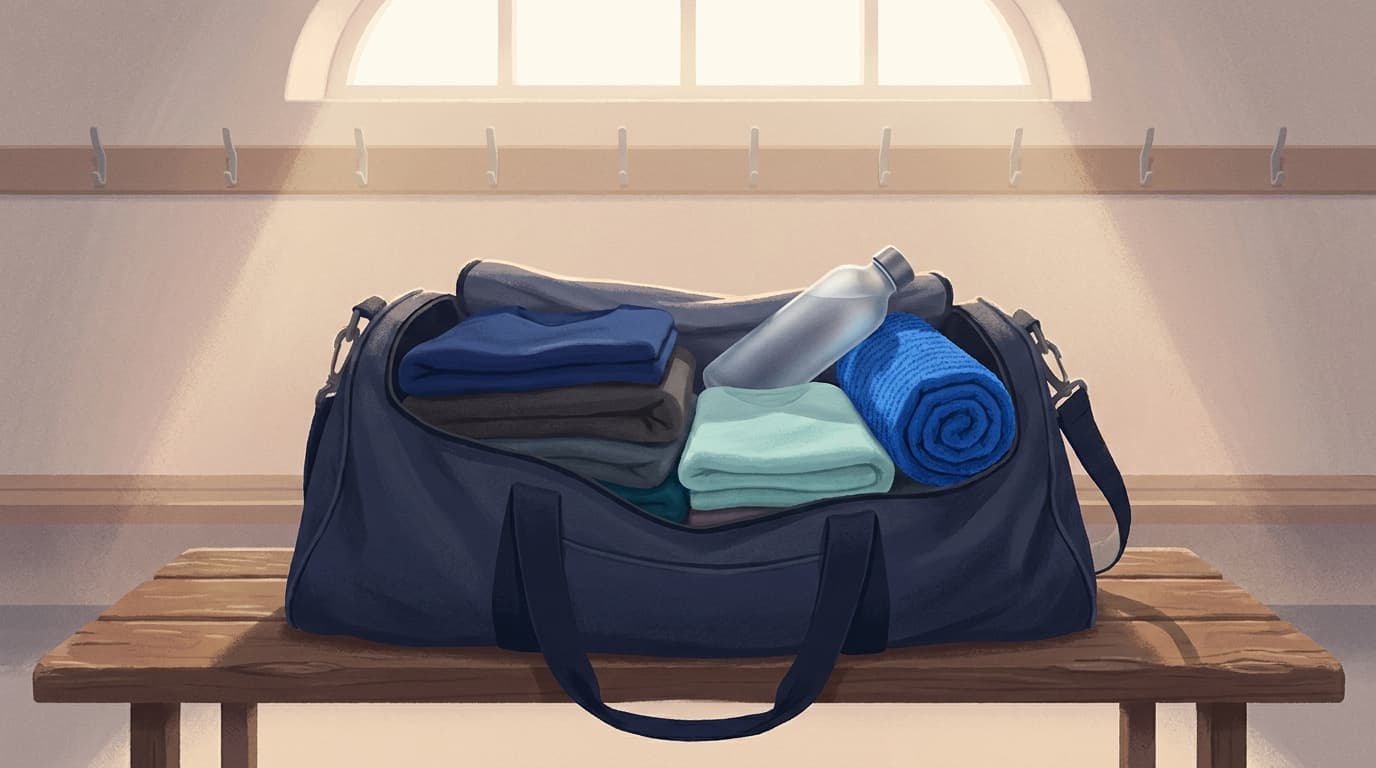
Why the bag matters more than you'd think
Most men who stop going to the gym, the club or the Sunday ride don't stop because of the exercise. They stop because of the logistics. The worry about a wet patch on the drive home. The business of changing with other men about. The not knowing what to do with a used pad in a place that has nowhere obvious to put it.
All of that is solvable with a bag that is packed properly. It takes one evening to sort out and then it sits in the boot of the car, ready. The difference it makes is out of proportion to the effort.
What follows is a list by activity, because a golf bag and a gym bag have different problems. Pick what applies to you and ignore the rest.
1. Protection: one on, two spare, and the right shape
Whatever you normally wear, bring more than you think you need for the length of the session. Exercise shifts things. A level of protection that carries you through an ordinary morning at a desk can be caught out by an hour of movement, sweat and repeated standing up.
Shape matters as much as absorbency. A pad designed to sit in ordinary underwear will move around under sports shorts or cycling shorts unless something holds it in place. Close-fitting briefs under looser shorts usually solve this. Some men find absorbent underwear simpler for sport, because there is nothing to shift.
Put the spares in a small zipped pouch inside the bag rather than loose. Loose pads end up at the bottom under your shoes, and a crumpled one doesn't sit right.
2. A nappy sack or two, and a plan for them
Small opaque scented bags, sold for nappies, are the single most useful thing on this list. They cost almost nothing, they're silent, and they turn an awkward disposal problem into a thing in your pocket that nobody will look at twice.
Men's changing rooms and golf clubhouses often have no sanitary bin. That's the real issue, not the pad itself. With a sack, you seal it, pocket it, and deal with it in the general bin outside, at the petrol station, or at home. No decisions made under pressure.
Keep a strip of them in the bag and two folded flat in your wallet or the glovebox. You'll want them on the day you forgot the bag entirely.
3. Spare shorts, spare underwear, and a dark colour
Pack one full change of the lower half. Underwear, shorts or trousers, and socks if you're cycling or walking in the wet. You may never use it. Knowing it's there is what lets you relax enough to play properly.
Go dark. Navy, charcoal, black. A small amount of moisture is invisible on dark fabric and obvious on pale grey. This is not vanity, it's just removing one more thing to monitor. Plenty of men quietly rebuilt their whole sports wardrobe in darker colours and felt better for it.
Avoid thin technical fabrics that cling when damp. A slightly heavier short with a bit of structure hides more and behaves better when you sit down in the clubhouse.
4. For the bike: the saddle, the shorts, and a shorter first loop
Cycling puts pressure right through the area you're trying to retrain, and a narrow racing saddle concentrates it. A wider saddle, or one with a central cut-out, takes load off the middle. Getting the nose angled slightly down often helps too. It's worth a session with whoever fitted your bike.
Padded cycling shorts and a pad are not natural partners. The padding holds moisture against you and nothing stays where you put it. Many men go with close-fitting absorbent underwear beneath the cycling shorts instead, or ride shorter routes with a change of kit in the car.
Plan the first few rides as loops that pass your own front door, not point-to-point routes. A loop means you can stop at any time without an explanation to anyone.
Also worth reading: Back to the Walk, the Gym, the Bike and the Tee: A Five-Stage Return · 7 Exercises That Load the Pelvic Floor Hardest, and What to Do Instead
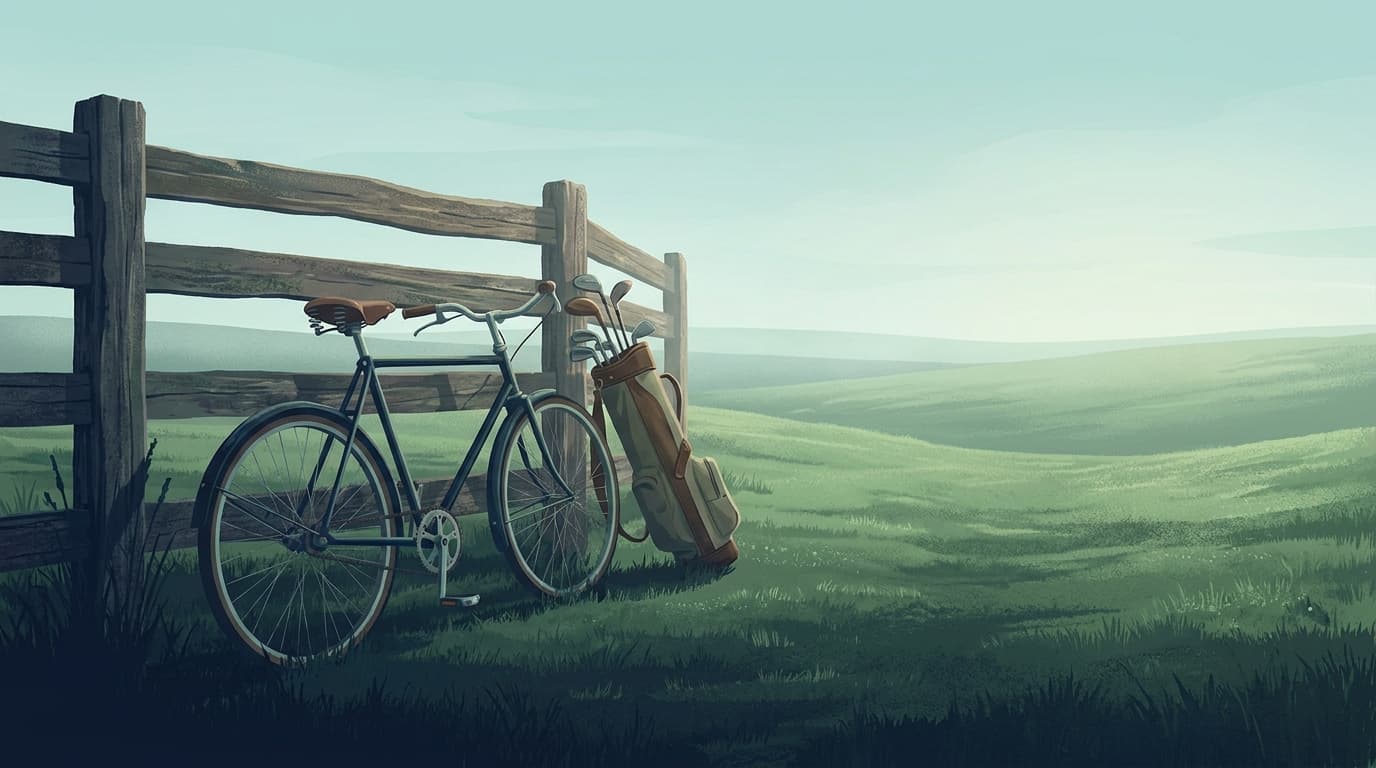
5. For golf: the trolley bag, the halfway hut, and the long wait
Golf's problem isn't effort, it's duration. Four hours, no reliable facilities after the ninth, and a swing that loads the middle hard every time you take the club back. Put a small pouch in the side pocket of the golf bag with a spare and a nappy sack. That's the whole system.
Know the course before you play it. Where the toilet is on the back nine, whether the halfway hut has one, and whether there's a gate you can duck out of near the twelfth. Doing that once means you stop thinking about it on every hole.
On the tee, a brace before the swing helps a lot of men. Lift and hold as you take the club back, and let go after the follow-through. It won't feel natural for the first few rounds. It usually becomes automatic by the end of a season.
6. For the gym: towel, water, and the exercises you'll modify
Bring a towel for the bench even if the gym provides them, and a bottle so you're not making trips to the fountain. Small things, but they keep you in one place and stop you standing up and sitting down more than you need to.
Heavy lifts with held breath are the ones that catch men out. Leg press, deadlifts, overhead presses. Breathe out on the effort, keep the weight at a level where you can, and build back up over weeks rather than trying to pick up where you left off two years ago.
If you're leaking on a particular machine every time, that's information rather than failure. Swap it for something that trains the same thing with less downward pressure and come back to it later.
7. For the walk: timing the drink, not skipping it
A long walk tempts men to drink nothing beforehand. It backfires. Concentrated urine irritates the bladder and makes urgency worse, and you arrive home thirsty and no drier.
Drink normally, but learn your own delay — the gap between a glass going in and the bladder asking for attention. Once you know roughly what yours is, you can time the last decent drink before you set off and walk with a clear hour or two ahead of you.
Carry one spare and a sack in a jacket pocket. That's enough. The whole point of walking is that it needs no equipment, and it's the activity most men get back to first and keep the longest.
8. Pack it once, leave it in the car
The bag only works if it's packed before you want it. Do it on an evening when nothing's riding on it, with everything laid out on the bed, and restock it the moment you use something rather than the night before the next game.
Keep it in the boot. Not in the hall, not on the landing. In the boot means the decision to go is never held up by the decision to pack, and that matters on the mornings when you're half looking for a reason to stay in.
After a month or two you'll find you're using less of it than you packed. That's the direction this goes for a lot of men — the kit shrinks as the control comes back. Until then, carrying more than you need is what lets you turn up at all.