Before you book: pick the round, not just the day
Golf is four hours away from a building. That is the real problem, and it is worth solving before you book rather than halfway down the fifth.
Look at the course in your head and count the toilets. Most clubs have the clubhouse, something at the turn, and sometimes a hut or a greenkeeper's block. Know where they are before you walk out. If you are not sure, ring the pro shop and ask what facilities are on the course. It is an ordinary question and nobody will think twice about it.
For the first round back, consider nine holes rather than eighteen. Not as a demotion. As a sensible first load. You can always add the back nine next week, and finishing a short round feeling fine beats grinding out a long one you spend worrying about.
The tee time matters more than you think
An early tee time means an empty course, short waits and a clear run to the clubhouse if you need it. It also means you are playing before you have had three cups of tea.
A mid-morning time usually means your bladder is at its busiest, because most of what you drank at breakfast arrives around then. If you know your own delay between drinking and needing to go, work backwards from it when you book.
Avoid the slow Sunday fourball slot for your first round back. Waiting on every tee gives you time to stand still, feel full and talk yourself into worry. Keep moving.
The car park: get sorted before you get out
Do the practical things in the car, where it is private. Fresh protection on, spare in the bag, wipes and a sealable bag somewhere you can reach without unpacking everything.
Go to the toilet in the clubhouse before you start, even if you do not feel much. Do not strain to squeeze out the last drop. Let it come, stand, give it a moment, and go.
Then put a dark towel over the trolley handle or in the top of the bag. It costs nothing and it is the single most useful thing you can carry on a course.
The first tee: the swing is the load
A golf swing is a fast rotation through the middle of your body. The downswing spikes pressure in your abdomen, and that pressure has to go somewhere. For a lot of men, the driver is where the first drip of the day happens.
Use the knack. Before you start the backswing, draw up and gently hold the pelvic floor, then swing. Let go after the ball is gone. It is a half-second squeeze, not a clench you hold through the whole shot, and it should not stop you breathing.
Do not try to brace on every shot of the round. Save it for the ones that actually load you: driver, long irons off a tight lie, and anything out of thick rough. Putts and chips need nothing.
Holes one to six: what to drink and when
Drinking less to stay dry backfires. Concentrated urine irritates the bladder and makes urgency worse, and on a warm day you will feel rough by the twelfth. Carry water and sip it.
Sip rather than gulp. A mouthful every couple of holes keeps you topped up without sending a sudden load down to the bladder. Save the bigger drink for the turn, when you are near a toilet anyway.
Coffee at the halfway hut and a pint at the end both hit the bladder harder than water. That does not mean never. It means know which one you are choosing and when it will arrive.
Also worth reading: What to Put in the Bag: Kit for the Gym, the Bike and the Golf Course When You Leak · 7 Exercises That Load the Pelvic Floor Hardest, and What to Do Instead
The turn: the reset that saves the back nine
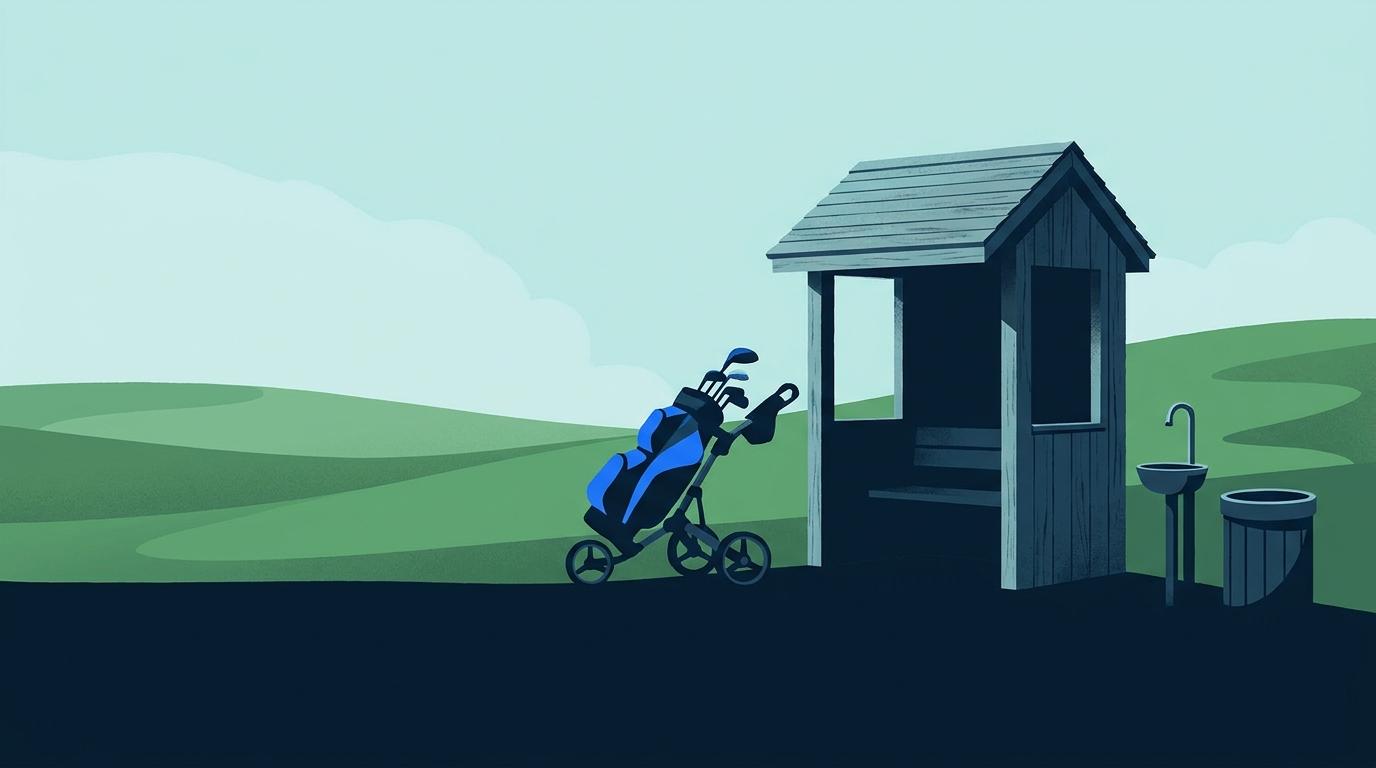
At the ninth, go. Not because you are desperate, but because the next chance may be an hour away. This is the one place on the course where a planned stop costs you nothing.
Change your pad at the turn if you have used one. A fresh one at the halfway point is far more comfortable than a heavy one for the last two hours, and it takes a minute in a cubicle.
Have something to eat, a drink of water, and walk on. A short, ordinary stop. Nobody in your fourball is keeping track.
Holes ten to eighteen: tired legs, looser control
Control often slips late in a round. Tired legs mean a sloppier swing and a less reliable brace, and the pelvic floor fatigues like any other muscle. A heavier pad in the last few holes is not a step backwards. It is just the end of a long walk.
If you get a sudden urge between greens, stop walking. Standing still, squeezing a few quick flicks, and letting the wave pass usually works better than hurrying towards a building. Hurrying makes it worse.
Pull the trolley rather than carrying the bag. Twenty-odd pounds on one shoulder over four miles is a real load through your middle, and a trolley takes it away for the price of looking slightly less youthful.
The nineteenth, and what you do tomorrow
Change before you sit down in the bar. A fresh pad and five minutes in the locker room means you can have a drink without thinking about it. Then stay for the drink. The company is half the reason you play.
That evening, expect to feel it. A bit more leaking than usual in the hours after a round is common after a long walk and a lot of rotation, and it usually settles by the morning. If something genuinely alarms you — pain, blood, a sudden change you cannot explain — that is one for your doctor, not for working out on your own.
Then write down three things: which holes were wet, what you drank, and how the swing felt. Do the same after the next round. Within a month you will know your own pattern well enough to plan around it, and you will be booking tee times because you want to play, not because you have worked out whether you can.