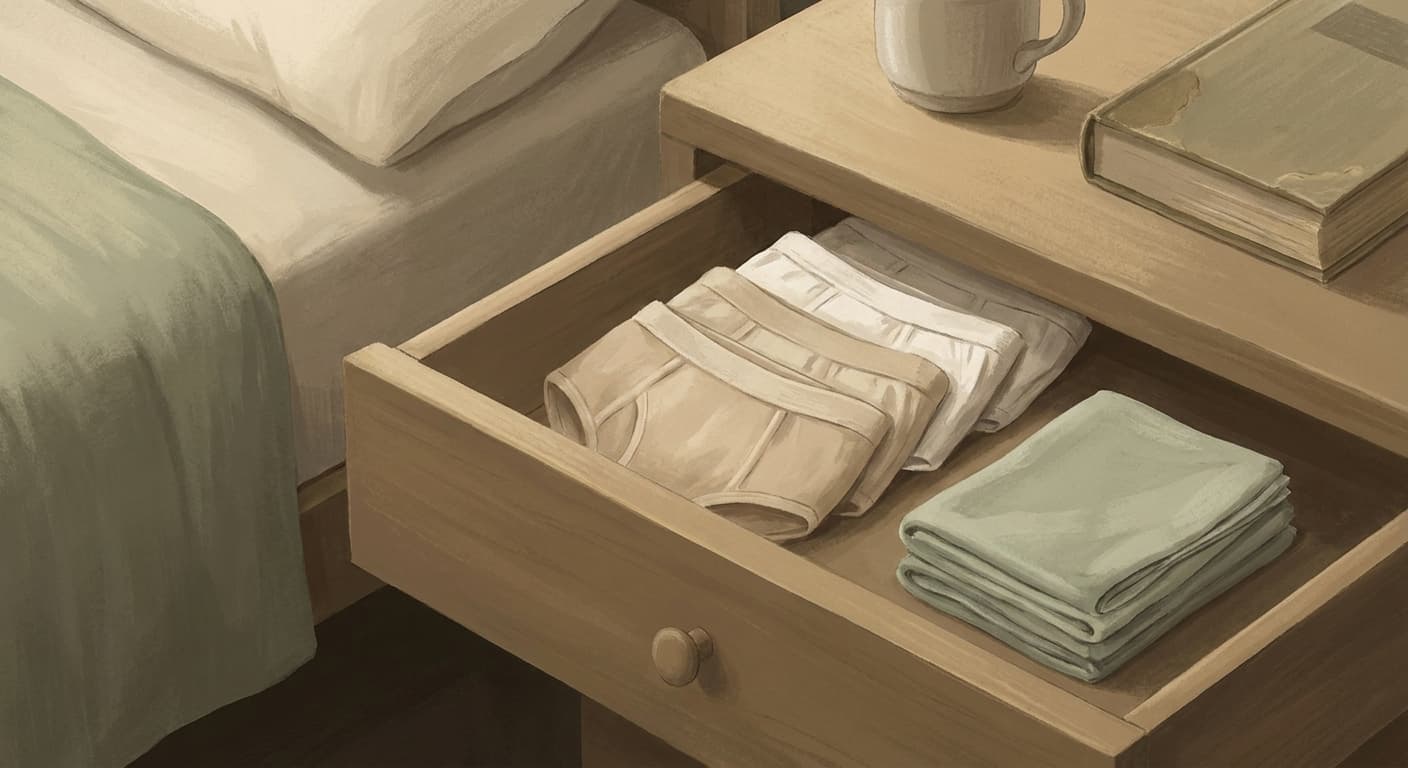
Why stepping down is its own skill
You have been training for a while. Things are better. Fewer leaks, smaller ones, or the cough that used to catch you out no longer does. And yet you are still putting on the same pad every morning, out of habit and out of fear.
That is not silly. Most women who have leaked for years have one memory they never want to repeat — the wet trousers at work, the damp seat in someone's car. One bad day can undo a year of confidence. So the pad stays, long after it is needed.
Reducing protection deserves the same care you gave to the training itself. Done gradually, you find out what you actually need rather than what you are afraid of. Done in one jump, you get a soaking, a fright, and you go straight back to the thickest thing in the drawer. This is a six-stage plan to do it the first way.
Stage 1: Find out what you are actually using
Before you change anything, spend one ordinary week paying attention. Not a diary of every sip and every trip — just one thing. At the end of each day, when you take the pad off, look at it.
Was it dry? Barely marked? Properly wet? Make a note somewhere private: dry, damp, wet. Three words is enough. Do the same for any change you made mid-day.
Most women are surprised. A pad changed twice a day out of routine is often changed dry. If that is you, you are already over-protected, and the rest of this plan is simply catching your underwear up with your bladder.
Stage 2: Change the size before you change the type
The first step down is the gentlest one: the same kind of product, one level thinner. A heavy pad becomes a moderate one. A moderate pad becomes a light one. Nothing else changes — not the days you wear it, not where you go.
Give it two weeks. You are testing one variable, so if something goes wrong you know exactly what it was. And keep the thicker ones. Do not throw them out in a burst of optimism; put them at the back of the cupboard where they are available without being the default.
If the thinner one holds up, you have learned something real: your leaks are smaller than your habits assumed. If it does not, you have learned that too, and nothing is lost. Go back up and try again in a month.
Stage 3: Pick your low-risk days first
Not every day asks the same of you. A day at home, mostly sitting, no lifting, no long walk, no cold air — that is a low-risk day. A day with grandchildren, a tennis match, a heavy shop, a streaming cold — that is not.
Choose the low-risk days for your next step down, whether that is a liner instead of a pad, or nothing at all. Keep full protection on the demanding days without any sense of going backwards. That is not failure, it is matching the tool to the job.
Over the weeks, watch which days you manage with less. The line moves. A day that felt risky in March often feels ordinary by June, and that quiet shift is usually the clearest sign that training is working.
Also read: How Long Does Pelvic Floor Training Take? A Realistic Timeline, Stage by Stage · The Map You Carry in Your Head: 7 Ways Leaks Shrink a Life, and How to Take Back Each One
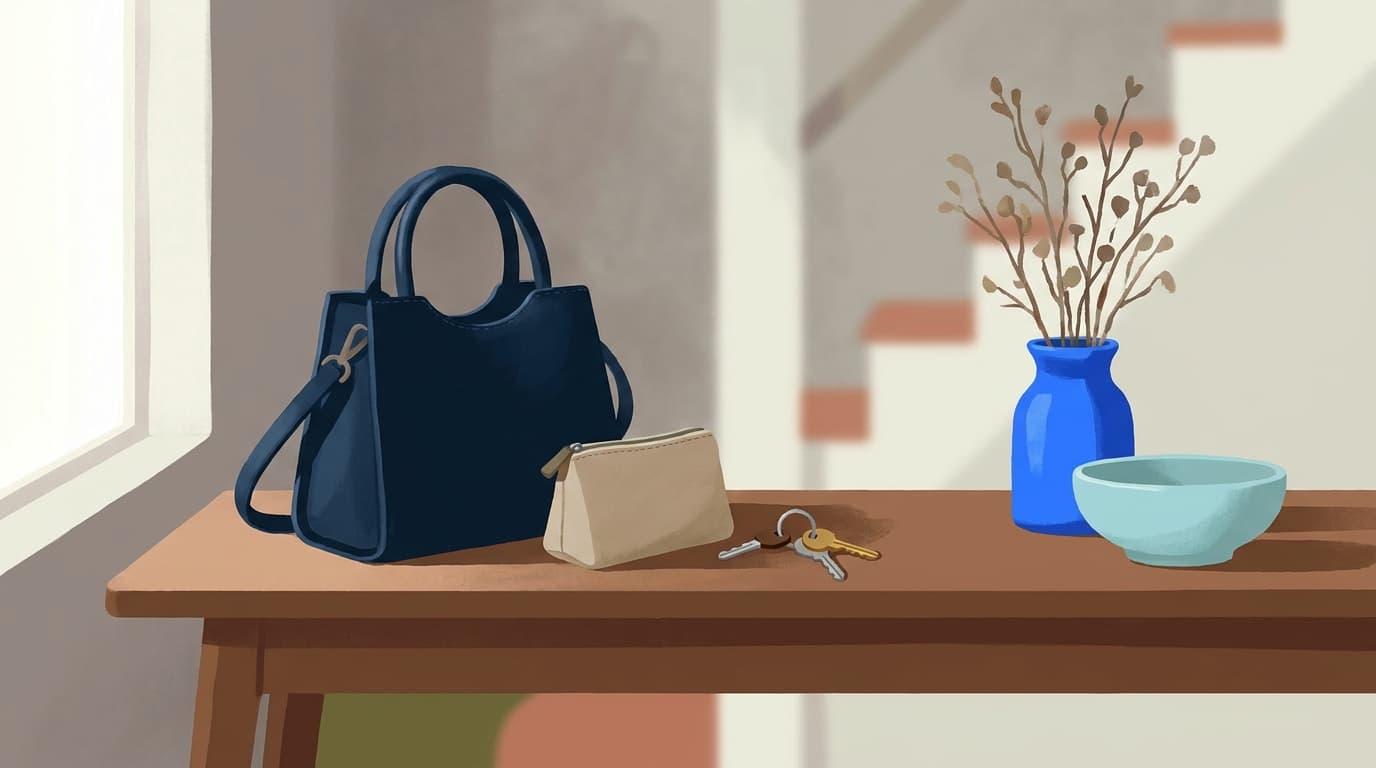
Stage 4: The first hours without anything
The first time you go without is best done at home, in dark trousers, with the washing machine in the house and nowhere you must be. An hour. Then an afternoon. Then a morning out somewhere close, with a known toilet.
Take a spare pair of underwear and a plastic bag in your handbag. Not because you expect to need them — because carrying them is what lets you walk out of the door. The bag is permission, not pessimism.
Expect to think about it constantly for the first few goes. That is normal and it fades. After a handful of uneventful afternoons, your body stops sounding the alarm, and you stop checking.
Stage 5: Keep the brace, lose the backup
Protection catches a leak. The squeeze prevents one. As you wear less, the habit that has to fill the gap is the one you have been building in training: a deliberate tighten of the pelvic floor just before the thing that usually catches you out.
Before the cough. Before you stand from the sofa. Before you pick up the shopping bag, before you sneeze, as you step off the kerb. Short, firm, then let go properly afterwards — a floor that never releases gets tired and starts letting you down in the afternoons.
If you are not sure you are squeezing the right muscle, go back and check that before you reduce protection further. The brace is the thing you are relying on now, so it is worth knowing it is real.
Stage 6: Decide what you keep, and why
The aim is not to own nothing. Plenty of women land somewhere sensible: no protection on normal days, a liner for a long drive, something more for the week of a bad chest infection. That is a reasonable life, not a compromise.
What changes is who is in charge. You are choosing protection for a particular situation rather than wearing it because you always have. Keep a small supply, keep it where you can find it, and stop buying in bulk out of dread.
Pay attention to what the step-down teaches you along the way. If the leaks are not shrinking after months of steady work, or if something new appears — pain, blood, a feeling of heaviness or a bulge, a sudden change in what your bladder does — that is a conversation for your doctor, not a reason to buy thicker pads. Otherwise, keep training, keep testing, and let the drawer get emptier at the pace your body sets.