
First, the rule that governs everything: breathe out on the effort
Almost every lifting mistake comes down to the same thing — holding your breath and bearing down. When you hold your breath and push, the pressure inside your abdomen has to go somewhere, and part of it goes straight down onto the pelvic floor.
So the habit to build is simple. Breathe out as you do the hard part. Lift on the out-breath. Stand up on the out-breath. Push the drawer shut on the out-breath. Breathe in again as you lower or release.
It feels odd for a week or two, then it stops needing thought. If you want one change out of this whole article, make it this one. It costs nothing and it applies to every item below.
1. The shopping bags
Weight is less of a problem than how the weight is arranged. One heavy bag on one side twists you, and you brace through the middle to stay upright. That bracing is the bearing down you are trying to avoid.
Split the load into two bags, one in each hand, and keep them closer to your body than feels natural. Two trips beats one heroic trip. A trolley to the car and a bag at a time into the kitchen is not a defeat.
If you can, move the big shop to a delivery or to someone else's arms. Save your lifting for the things only you can do.
2. Getting out of a chair, the car, and the bath
This is the one most women do dozens of times a day without noticing. The usual pattern is a held breath, a shove through the arms, and a grunt. Repeated that often, it matters.
Try this instead. Shuffle to the front edge of the seat. Lean your chest forward over your knees. Breathe out, and let the out-breath carry you up as you push through your legs. A light lift of the pelvic floor just before you rise helps, once that lift is reliable for you.
Getting out of the bath is the same shape, with wet hands and less grip. A rail or a hand on a solid edge is not giving in. It stops the sudden all-or-nothing heave that pushes down.
3. The laundry basket and anything at floor level
A full wet wash is heavier than most women expect, and it sits on the floor, which means a long way down and a long way up. The temptation is to bend from the waist and yank.
Get the basket close to your feet first. Bend your knees, keep the basket against your body as you come up, and breathe out on the way up. If your knees object to squatting, kneel on one knee instead and come up from there.
Better still, stop the basket being full. Carry half a load upstairs, or move the drying rack to the same floor as the machine. Changing where things live is a legitimate exercise strategy.
4. Grandchildren, and the lift you cannot refuse
A toddler reaching up with both arms is not a lift you are going to turn down, and nobody is suggesting you should. But you can change how it happens.
Ask them to climb onto the sofa or a step first, so you are lifting from waist height rather than from the floor. Sit down and let them come to you. When you do lift, hold them in front of you and close, breathe out as you take the weight, and put them down before your arms start shaking.
Carrying on a hip for a long walk is the harder one. Swap sides often, use a pushchair for the distance, and keep the long carries short.
5. Coughing, sneezing and blowing your nose
A cough is a sudden downward shove, and in a bad winter you might do hundreds in a day. This is where many women notice their heaviness is worse by evening.
Learn the brace. As you feel a cough or sneeze coming, lift the pelvic floor first and turn your head over your shoulder. Lifting first, rather than clenching afterwards, is what makes the difference. It takes practice before it becomes automatic, so rehearse it on small coughs.
If a cough has gone on for weeks, that is worth a conversation with your doctor rather than something to train around.
Also read: Straining on the Toilet: 7 Steps to Stop Constipation Undoing Your Bladder Work · 6 Signs Your Pelvic Floor Is Too Tight, Not Too Weak
6. The toilet, every single time
Straining on the toilet is the most reliable way to undo a week of careful lifting. Hard stools and pushing put sustained downward pressure on exactly the tissue you are protecting.
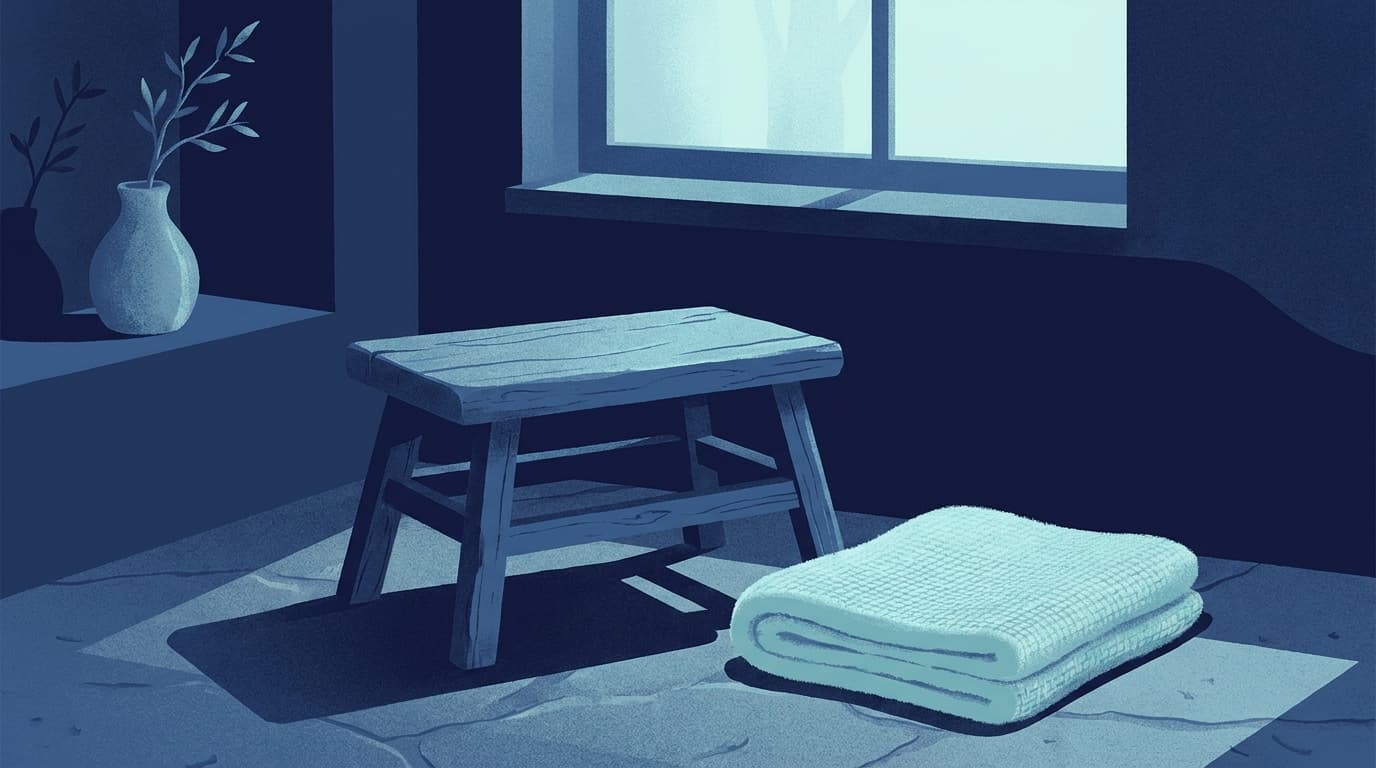
Sit, do not hover. Get your knees higher than your hips with a low stool under your feet. Lean forward, rest your forearms on your thighs, and let your belly relax outward. Breathe out slowly instead of holding and pushing. If nothing is happening, stand up and come back later.
Keeping stools soft with fluid, fibre and movement is part of your prolapse management, not a separate issue.
7. Exercise: what tends to suit, and what tends not to
Movement is good for you and stopping everything is not the answer. The sorting rule is impact and downward load. Walking, swimming, cycling, Pilates and mat work done without breath-holding generally sit well. Running, jumping, skipping, high-impact classes and heavy overhead lifting generally do not, at least not while symptoms are loud.
Sit-ups, crunches, plank work held with a clenched jaw and double leg lifts all raise pressure and push down. There are gentler ways to work your middle — side-lying work, four-point work, breathing-led core exercises — and a women's health physiotherapist can show you which version suits your body.
Watch the symptoms rather than the clock. Heaviness, dragging, or a sense that something is lower by the end of a session is the signal to make it gentler or shorter, not to push through.
8. Gardening, hoovering and the jobs that go on for hours
It is rarely one big lift that causes a bad evening. It is three hours of bending, dragging and holding your breath over a weeding fork.
Break the time up. Twenty minutes, then a different task, then twenty minutes. Kneel on a pad rather than bending from the waist. Push the hoover and the wheelbarrow with your legs, close to your body, instead of hauling with braced arms. Move bags of compost in halves, in a barrow, or not at all.
Standing all day is its own load. If a long day on your feet leaves you heavy, build in two spells of ten minutes lying down with your hips slightly raised on a cushion. Many women find that settles the dragging feeling.
9. What to do when something feels worse
Symptoms with a prolapse move about. Heavier by evening, heavier before a period, heavier after a long day, lighter after a rest — that pattern is common and is not a sign you have done damage.
What does need a doctor: new or sudden heaviness, a bulge you can see or feel that was not there before, bleeding, pain, difficulty passing urine or stool, or anything that changes quickly. Do not wait to see whether it settles.
Your pelvic floor training sits alongside that care. Gentle, consistent, lifting rather than pushing, built into the lifts and coughs and chair-rises you already do every day. That is the version that lasts, and it is the version that fits around a prolapse rather than fighting it.