
Why lifting leaks when nothing else does
Plenty of men find they are fine sitting, fine walking, fine most of the day — and then they pick something up and feel the warmth. It is not random. When you lift, the muscles around your middle tighten and the pressure inside your abdomen goes up. That pressure has to go somewhere. Some of it goes down, onto your bladder and the floor of muscle underneath it.
If that floor is weak, slow, or already tired, it gives a little. You get a squirt rather than a stream. Then you put the thing down and you are fine again, which is why it is easy to dismiss and easy to repeat twenty times a day.
None of the seven below means you should stop lifting. Carrying things is part of being a functioning adult and giving it up costs you more than it saves. The fix is almost always in the timing, the shape of the lift, and what you do with your breath.
1. The shopping, carried in one trip
Two heavy bags, one in each hand, from the boot to the kitchen in one go because you are not making a second trip. The weight pulls your shoulders down, you hold your breath on the walk, and the pressure sits on your bladder for the whole thirty seconds.
Split the load. Three light trips put far less downward pressure through you than one heavy one, and you keep breathing through all of them. If you must do it in one, use a trolley or a crate with handles and keep the weight close to your body rather than hanging off your arms.
If you do carry heavy, squeeze before you take the weight — a firm lift and hold as your hands take the bags, not after. Breathe out while you stand up. Holding your breath is what turns a lift into a push.
2. The bin, the recycling, the bag of compost
Outdoor loads are awkward loads. The wheelie bin needs a shove over a kerb. The garden waste bag is floppy and you end up bent over with your arms out in front of you. The further the weight is from your body, the harder your middle has to brace.
Get the load close and get your knees involved. Bend at the hips and knees, bring the bag against your thigh or chest, then stand. Arms-out-and-hinge-forward is the shape that costs you most.
For the bin itself, pull rather than push where you can, and take the kerb at an angle instead of heaving it straight up. Small changes in angle take real load off.
3. Picking up a grandchild
This one is different because you do not get to plan it. A child lifts their arms and you lift them, usually from a standstill, usually fast, often while they are wriggling. It is a heavy, unpredictable, repeated load, and it is the one men least want to give up.
Change the starting point rather than the answer. Kneel or crouch first so the child comes to your chest at your level, then stand with them held close. Sit down on a chair and let them climb on, rather than lifting them from floor to shoulder height.
And brace. Squeeze and hold before your hands reach them, not as you straighten. If you can get the timing right with a toddler, you can get it right with anything.
4. The suitcase on the stairs
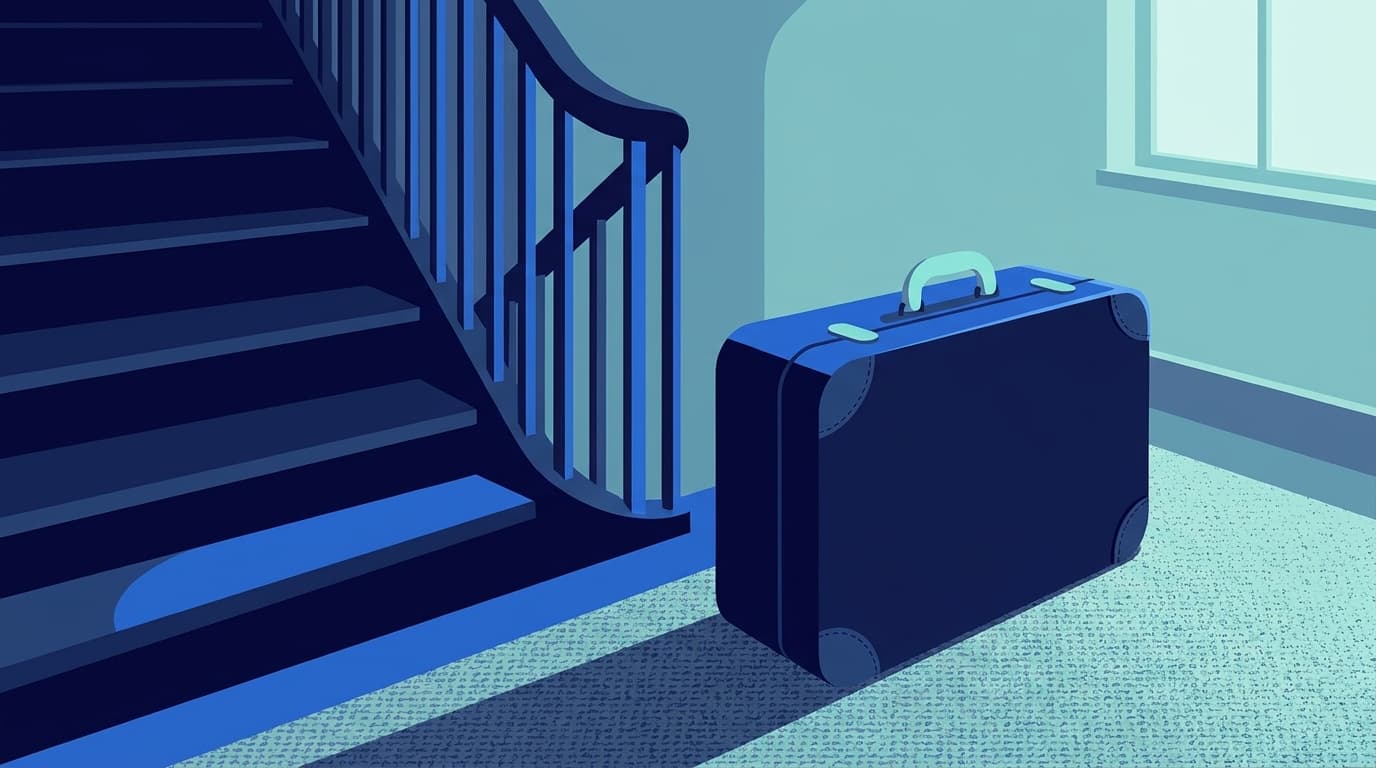
A case up a flight of stairs is a lift repeated every step, with a twist in it. You are carrying one-sided, leaning away, and going up means every step is a small push. By the top you have done more work on your pelvic floor than a whole training session.
Take the weight out of the equation first. Unpack the heaviest things into a second bag and make two trips, or slide the case up step by step rather than carrying it clear. Nobody is watching, and if they are, they are not thinking about it.
Where there is a handrail, use it. Giving your arm something to pull on takes a surprising amount of pressure out of your middle.
Also worth reading: 7 Exercises That Load the Pelvic Floor Hardest, and What to Do Instead · The Quick Flick: How to Train the Fast Squeeze That Catches a Cough
5. Getting up out of a low chair
You would not call this lifting, but you are lifting yourself, and you are the heaviest thing you carry all day. A deep sofa, a low garden chair, a car seat — all of them make you push hard from a bad angle, usually with a breath held.
This is the single easiest one to fix. Shuffle forwards to the edge first. Get your feet back under your knees. Put a hand on the arm of the chair. Squeeze, breathe out, and come up on the out-breath.
Do it that way for a week and it stops being something you think about. Men often notice the change here before they notice it anywhere else, because it happens so many times a day.
6. Loading and unloading the car boot
Boots are the worst height for a lift. Too low to stand straight, too high to crouch, and there is a lip to clear. So you reach in, round your back, and drag the thing towards you with your arms at full stretch.
Slide first, then lift. Pull the load to the edge of the boot so it is against your body before any of your weight goes under it. Then bend your knees and stand, rather than bending your back and hauling.
If it is a dog, a wheelbarrow, a set of clubs — anything you do often — it is worth buying a ramp, a trolley or a lighter version of the thing. That is not weakness, it is good sense.
7. The repeated small lift you never count
The single heavy lift gets all the blame, but it is often the small ones that wear you down. Twenty bricks moved one at a time. A morning of stacking logs. An afternoon of weeding, up and down, up and down. Each one is nothing. Together they tire the muscle until the last few have no hold left in them.
You will usually notice this as leaks that get worse through an afternoon rather than all at once. That is a fatigue pattern, not a sign you are going backwards.
Build in breaks before you need them. Ten minutes of work, two minutes standing up straight and breathing. If you can feel the squeeze getting weaker when you test it, stop — that is the muscle telling you the useful part of the job is done.
What to take into tomorrow
Pick one of these. The one you do most often, not the one that leaks most dramatically. For most men that will be getting out of a chair or carrying the shopping, because those happen every day without being planned.
For a week, do that one lift the same way every time: weight close, squeeze before you take the load, breathe out as you stand. You are training the timing, and timing is what catches you out when you are not thinking.
Then add the next one. Over a couple of months the brace stops being a decision and becomes the way you move. That is the point where lifting stops being something you dread and goes back to being something you just do.