1. The Sound Trigger: Running Water You Didn't Choose to Hear
A cistern refilling slowly. A tap dripping in the en suite. A radiator ticking as water moves through it. For a lot of men, the sound of running water pulls hard on the bladder, and at two in the morning your defences against that pull are at their lowest.
The fix is dull and it works. Get the dripping tap seen to. If the cistern hisses for minutes after a flush, that valve is worn and a plumber will change it in half an hour. Shut the bathroom door at night rather than leaving it ajar.
If you can't fix the noise, mask it. A fan, or a small white-noise machine, gives the ear something flat and steady to sit on. You are not trying to sleep through a signal you'd want to hear. You're removing one you don't need.
2. The Cold Bedroom, and Cold Feet in Particular
Cold makes the bladder feel fuller than it is. Most men know this from standing at a bus stop in January. Fewer notice it happening in their own bedroom at four in the morning, when the heating has been off for hours and the duvet has migrated.
Two things help. Keep the bedroom cool but not cold — sleeping cold is what wakes you, not what keeps you asleep. And keep your feet warm. Bed socks are not glamorous and they make a real difference to how urgent things feel when you first sit up.
The other cold moment is the trip itself. A dressing gown within reach of the bed, and something on your feet, means the walk to the bathroom doesn't turn a mild signal into an emergency.
3. The Dark Landing and the Fumbled Journey
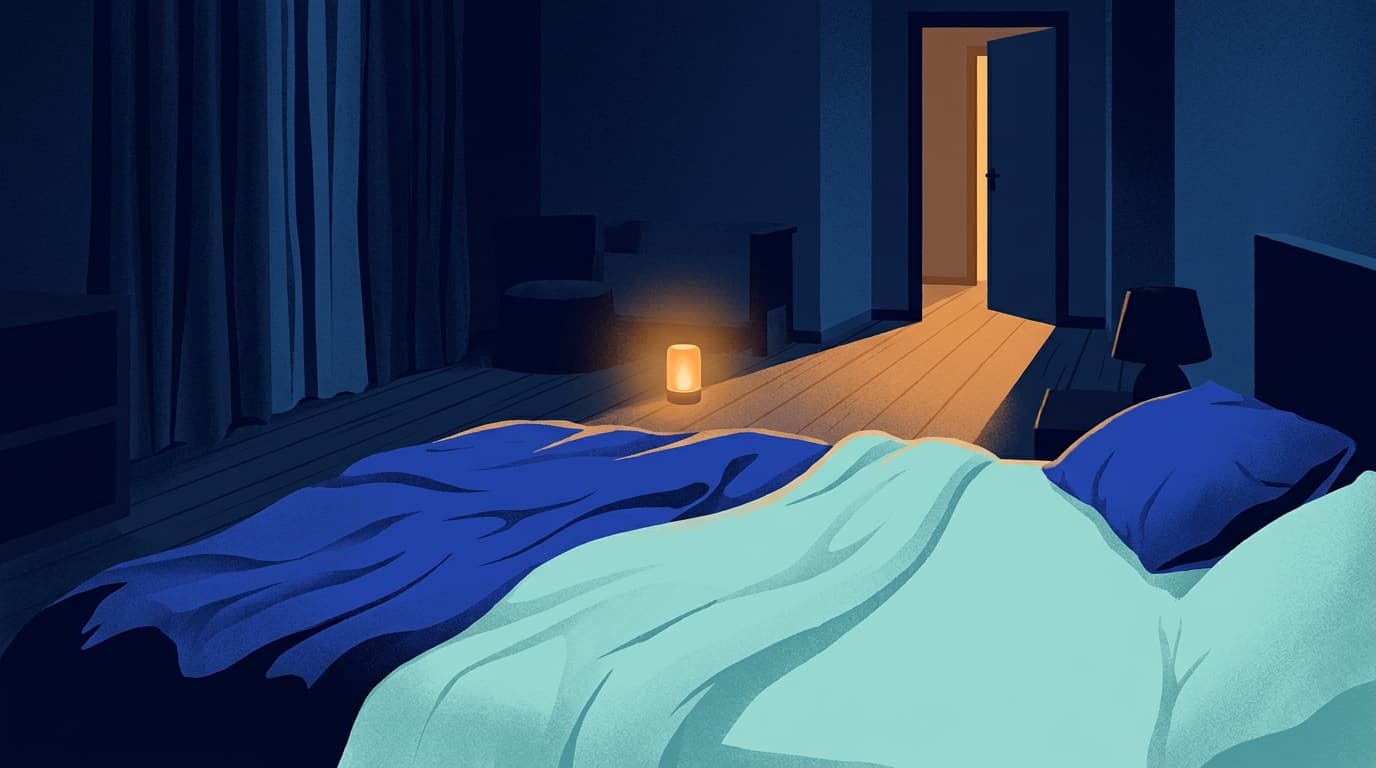
Urgency and distance are a bad combination. If getting to the toilet involves finding a light switch, negotiating a step, and waiting for your eyes to adjust, you have added twenty seconds you may not have. Many men lose more at night on the journey than in the bed.
Light the route in advance. Plug-in sensor lights, low and warm-coloured, along the skirting between bed and bathroom. Warm light, not bright white — you want to see the floor without waking yourself fully.
Clear the path while you're at it. The chair with clothes on it, the dog bed, the phone charger cable across the doorway. Walk the route once with the lights you actually use at night and move whatever you have to step around.
4. The Nightcap and the Late Cup of Tea
A beer with the football or a whisky before bed does two things to a night. It sends more fluid through you over the following hours, and it makes your sleep shallower, so you surface more often — and each time you surface, you notice your bladder.
Tea and coffee do their own version. Caffeine irritates the bladder in a lot of men, and it stays in the system longer than people expect. A five o'clock cup can still be doing something at eleven.
You don't have to give any of it up. Move it earlier. Have the drink with dinner rather than in the last hour before bed, and let the evening's last cup be something without caffeine. Try it for a week and see whether the number of trips changes.
5. Waking on Autopilot and Going Anyway
This one is quiet and it builds slowly. You wake for some other reason — a noise, a dream, a stiff shoulder — and because you're up anyway, you go to the toilet. Do that for long enough and your bladder learns to expect emptying at that hour, whether or not it needs it.
Next time you wake, pause before your feet hit the floor. Ask yourself honestly whether the signal is real or whether you're just awake. If it's mild, lie still for a few minutes and see whether it fades.
If you do decide to go, take your time and empty properly rather than rushing back to bed half-done. A hurried trip often means another trip an hour later. Sitting down, rather than standing, helps some men finish the job.
6. The Bed That Makes Every Small Leak a Big Event
A little leak is a nuisance. A little leak that means stripping a bed at three in the morning is what wrecks the whole night, and the dread of it can keep you half-awake for hours waiting to see if it happens.
Take the stakes down. A washable mattress protector under the sheet costs little and means the mattress itself is never at risk. Keep a spare sheet and a change of nightwear where you can find them in the dark — not at the bottom of a cupboard on the landing.
Absorbent night pants, or a heavier pad than you'd wear in the day, are a reasonable choice for this. They are not a step backwards or an admission of anything. They are how you buy yourself an uninterrupted night while your training does its work.
7. Legs, Fluid, and the Reservoir You Fill All Day
If your ankles are puffy by evening, fluid has been pooling in your legs through the day. When you lie down, that fluid moves back into circulation and your kidneys deal with it — which is one reason some men are busiest between midnight and three, no matter how carefully they drank.
Two practical moves. Get your feet up for half an hour in the early evening — properly up, level with your hips or higher, not just on a footstool. And walk during the day if you can. Moving calves push fluid back rather than letting it settle.
If the swelling is new, only on one side, or comes with breathlessness, that is a conversation with your doctor rather than something to manage with cushions. Say it plainly when you book: my ankles have started swelling.
8. Lying Awake Doing Sums About Tomorrow
The worst part of a broken night is often not the trips. It's the twenty minutes afterwards, lying in the dark totting up how tired you'll be, whether this is getting worse, whether it will ever settle. That's the bit that turns one wake-up into two hours of nothing.
Have a plan for those twenty minutes so you're not deciding at three in the morning. A radio play at low volume. An audiobook with a sleep timer. Slow breathing, hand on your stomach, counting the out-breath. Anything that gives your mind a job that isn't the future.
And keep the long view where you can see it. One rough night is not a verdict. Progress with bladder control comes in weeks, not days, and nights usually settle after days do. Keep the training going, keep the bed easy to reset, and judge how you're doing by the month rather than by last night.