Why timing matters more than total
Most women who come to this already drink a sensible amount. The problem is rarely the total in the glass. It is that three quarters of it arrives between four in the afternoon and bedtime, because that is when the day finally slows down.
Your bladder does not care about daily averages. It cares about how fast it is filling right now. A litre spread across a morning is barely noticed. The same litre between six and ten at night arrives as a wave, and the wave lands at the worst hour.
So the plan below does not ask you to drink less. It asks you to move the drinking earlier, in a way you can actually keep up.
Stage 1: Write down what you actually drink, for two days
Not a week. Two days is enough and you will actually finish it. Write the time, what it was, and roughly how much. Tea at 7.15. Water at 10. Coffee at 11.30. Nothing until 3, then two mugs and a glass with dinner.
Do not change anything yet. You are looking at a shape, not a score. Most women find a long dry stretch in the middle of the day and a cluster in the evening.
Add one more column if you can: the times you went to the toilet, and whether any of them were urgent. That pairing tells you more than either list alone.
Stage 2: Find your dry stretch and fill it
Look at your two days and find the longest gap without a drink. For a lot of women it sits between mid-morning and mid-afternoon, swallowed by work, errands or caring for someone else.
That gap is where your evening drinking comes from. You arrive at six genuinely thirsty, and thirst at six is hard to argue with. Fill the gap and the evening gets easier on its own.
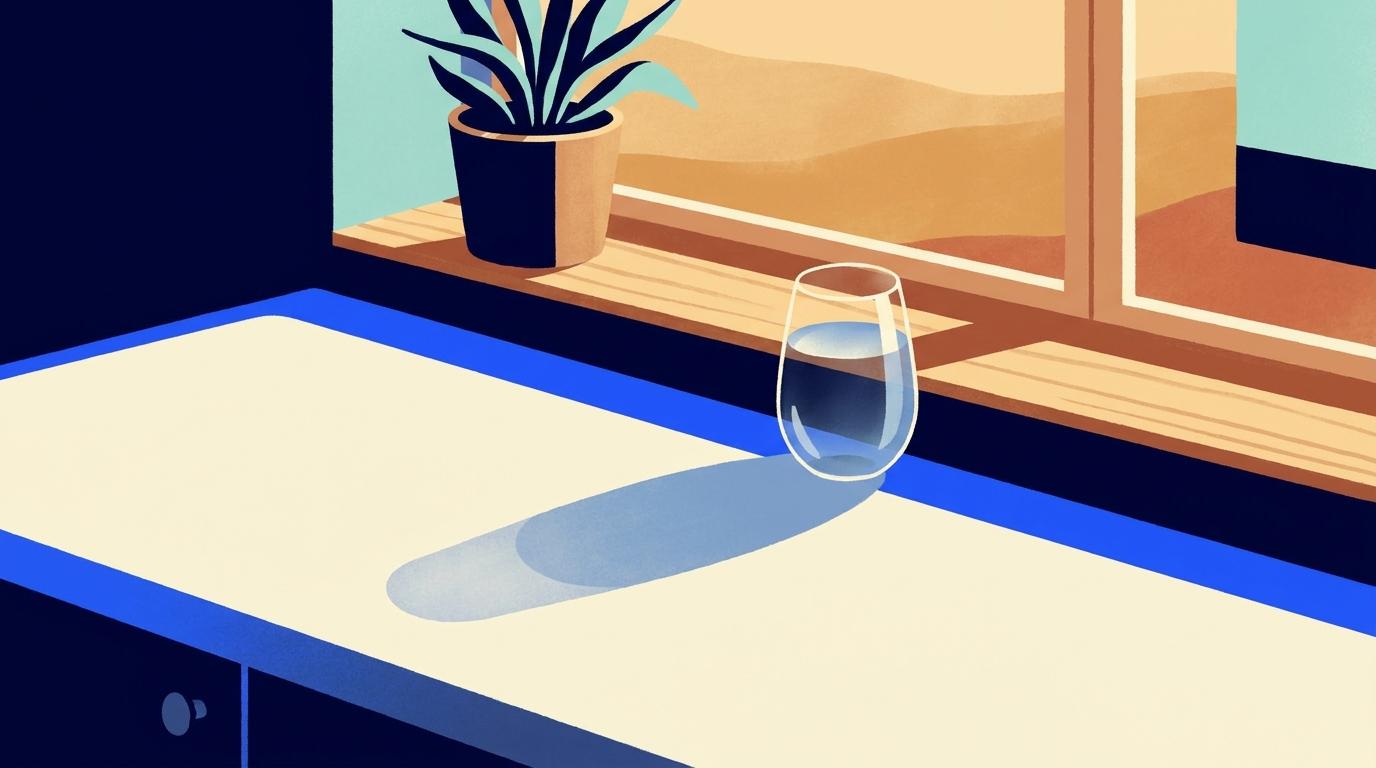
Put a glass somewhere you pass often. Kitchen worktop, desk, windowsill. Not in a cupboard. The whole trick is that you drink what you can see.
Stage 3: Spread it, small and often
A large glass downed quickly stretches the bladder faster than it likes, and a fast stretch is exactly what triggers urgency in a sensitive bladder. Smaller amounts, more often, land more gently.
Aim for something like a modest glass every couple of hours through the day rather than two big ones at either end. Sip while you do something else — the kettle boiling, the news, waiting for a call.
If you have spent years restricting fluids to avoid leaks, this will feel wrong at first. Concentrated urine irritates the bladder lining and makes urgency worse, so going too dry tends to backfire. Build up over a week rather than overnight.
Stage 4: Set a soft cut-off, not a hard one
Roughly two to three hours before bed, start tapering. Not stopping dead — tapering. Finish the mug you have, then switch to small sips if you want something.
What matters most is the last hour. A full mug of tea at ten o'clock will be at your bladder door somewhere around one or two in the morning, which is precisely the trip you are trying to avoid.
If you wake thirsty in the night, keep water by the bed and take a mouthful. Being bone dry is not the goal. Being sensibly tapered is.
Also read: Waking Two or Three Times a Night: An Evening Routine That Can Help · Is It Urgency or Stress? 8 Steps to Work Out Which Leak You Have
Stage 5: Deal with the drinks that irritate, one at a time
Coffee, strong tea, fizzy drinks, alcohol and some fruit juices can irritate the bladder lining and push urine through faster. Not for everyone, and not equally. Yours may be fine with coffee and awful with white wine.
Test one at a time, for about a week. Cut your second coffee, keep everything else the same, and see what happens to the urgency. Then put it back and try something else. Changing five things at once teaches you nothing.
And a practical note: the afternoon coffee is often the real culprit for the night, not the breakfast one. It is still working its way through you at bedtime.
Stage 6: Learn where your fluid sits during the day
If your ankles swell by evening, some of what you drank has been sitting in your legs rather than passing through. When you lie down, it comes back into circulation and your kidneys catch up — at two in the morning.
Putting your feet up for twenty or thirty minutes in the late afternoon, before the evening starts, lets some of that happen earlier in a chair instead of later in bed. Moving about during the day helps too.
If the swelling is new, one-sided, or comes with breathlessness, that is a conversation for your doctor rather than a drinking adjustment.
Stage 7: Match your drinking to the day you are having
A day at home is not a day on a coach. Plan the fluid around the day rather than following the same routine regardless.
Before a long journey or a concert, keep drinking normally through the morning, then taper an hour or two before you leave and empty your bladder before you set off. Do not go dry all morning to be safe — you will arrive irritable, thirsty and with a bladder that complains anyway.
Hot weather, exercise and illness all raise what you need. On those days, drink more and move the extra into the earlier hours. The principle stays the same: same amount, earlier clock.
Stage 8: Give it a fortnight, then re-read your notes
Two weeks in, do the two-day record again. Compare the shape, not the feeling. Memory is unreliable about this; paper is not.
You are looking for small, real changes — one fewer night trip, a bit more warning before you need the toilet, a steadier afternoon. These show up before anything dramatic does.
Drinking patterns work alongside pelvic floor training, not instead of it. Sorting the fluid takes pressure off the muscle; training the muscle gives you more to work with when the pressure comes anyway. Keep the two running together and you give yourself a fair chance of noticing the difference.