
Stage 1: Pick the anchor, not the time of day
Most people try to attach training to a clock. Seven in the morning. Half past eight at night. The clock moves, and so does the training, and then it stops.
An anchor is something you already do without deciding to do it. The kettle going on. Sitting down in the car before you turn the key. Brushing your teeth. Waiting for the computer to wake up. These happen whether or not you remembered them.
Choose one. Just one, for now. The best anchor is the one that happened today, yesterday and the day before, in roughly the same place, without you thinking about it.
Stage 2: Test it against a bad day, not a good one
Imagine the worst version of your week. The day the grandchildren arrive early, or you are out from eight until seven, or you feel rotten. Does your anchor still happen on that day?
If the answer is no, it is not an anchor. It is a plan. The morning coffee at the kitchen table disappears on a day you leave the house at half six. Sitting in the car does not.
Keep testing until you find something that survives a bad day. That is the whole point of this stage. An anchor that only works when life is calm will hand back your training the first week life is not.
Stage 3: Make the attached session small enough to be embarrassing
The habit forms around the link, not the length. Three good squeezes with a proper release between them is enough to count at this stage. It takes less than a minute.
Resist making it longer. A session that feels like a commitment invites negotiation, and you will lose that negotiation on a tired evening. A session that takes under a minute does not give you anything to argue with.
Quality still matters. Lift, hold without holding your breath, and let go completely before the next one. If you are not sure the right muscle is working, sort that out first — more repetitions of the wrong thing gets you nowhere.
Stage 4: Decide what the cue looks like for the first fortnight
In the beginning the link is not there yet, so you need a reminder sitting on top of the anchor. Something physical works better than a phone alert you learn to swipe away.
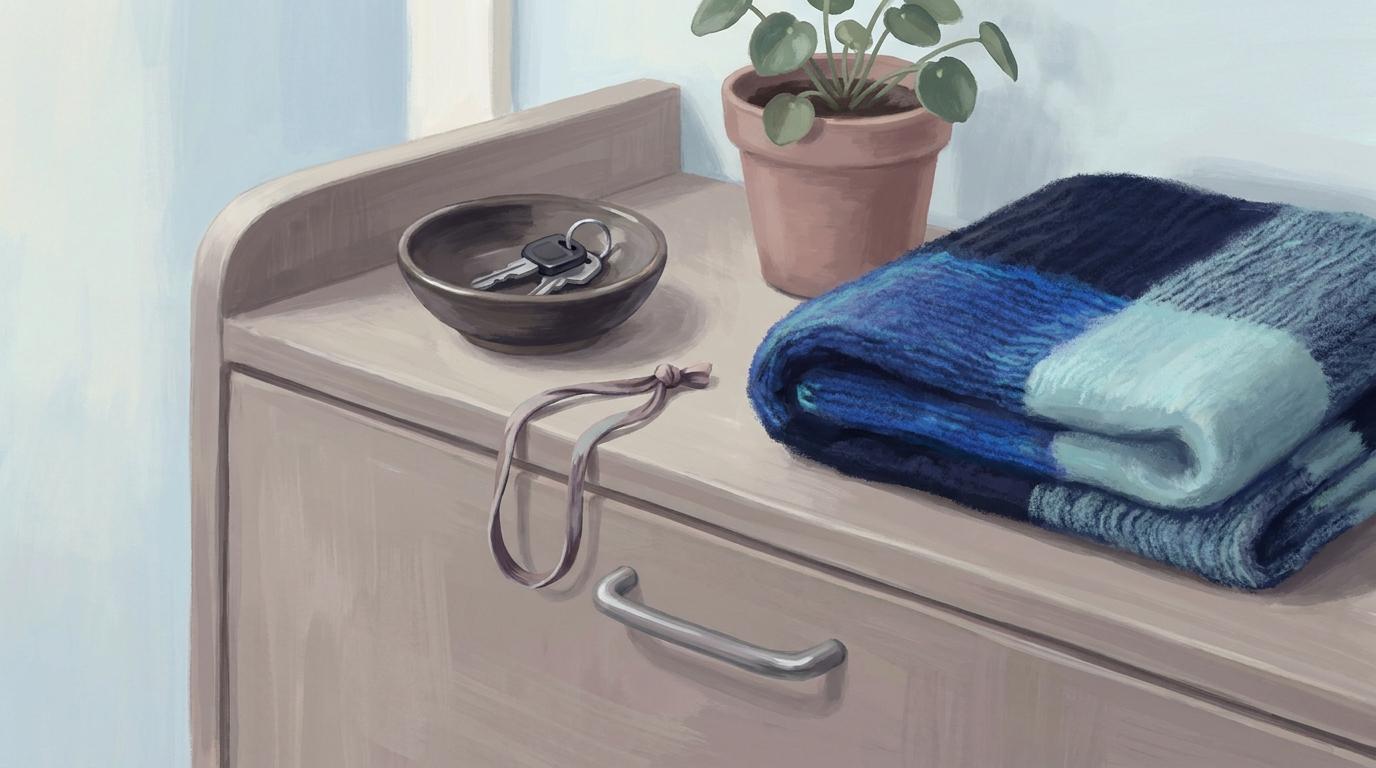
A hair tie around the kettle handle. A small sticker on the dashboard, low down where only you see it. A card tucked into the bathroom mirror frame. The object is not doing the training. It is only standing in for the memory you have not built yet.
Set a date to take it away — two weeks is reasonable. If you forget twice after removing it, put it back for another week. That is not failure, that is information about how well the link has set.
Stage 5: Train the link by doing it on the days it does not matter
Habits set through repetition, not through effort. The days that build the link are the ordinary ones where nothing is happening and the session feels pointless.
Do it on a Sunday when you are at home all day. Do it when you have had no leaks for a week and cannot see the reason. Those sessions are the ones teaching your brain that the kettle means squeeze.
You will miss days. Everyone does. One missed day is nothing. The thing to protect is the pattern across a week, not an unbroken run. Going back to the anchor the next morning is the whole repair.
Also read: A Good Week of Pelvic Floor Training, Day by Day · The 7 Moments Women Stop Pelvic Floor Training, and What Gets You Past Each One
Stage 6: Add a second anchor once the first is automatic
You will know the first one has set when you find yourself halfway through a session before you remember deciding to start. That usually takes a few weeks, sometimes longer.
Then, and only then, pick a second anchor at a different end of the day. Morning kettle and evening teeth. Car and kettle. Spreading them out matters more than how many you have, because a pelvic floor responds better to short work repeated than to one long stretch.
If you add the second one too early, you often lose both. There is no prize for speed here. One reliable anchor every day for a month beats three anchors that fall apart in a fortnight.
Stage 7: Repair the link when life breaks it
Holidays, illness, a week of hospital visits, a house move. Something will break the chain, and it will not be your fault.
When you come back, do not try to restart where you left off. Go back to the single anchor and the one-minute version, even if you were doing far more before. The link is what you are rebuilding, not the workload.
Most women find the second build-up is quicker than the first. The pathway is still there; it has just gone quiet. Give it a week of small, dull, reliable sessions and it tends to pick up again.
Stage 8: Let the anchor grow on its own terms
Once a session happens without being decided, it tends to get longer by itself. You finish three squeezes and do two more because you are still standing there. That is the right way round — length following the habit, not leading it.
This is also the point where the training starts turning up where you need it. A squeeze before you lift the shopping out of the boot. A brace before a sneeze. The habit stops being a slot in the day and becomes something your body reaches for.
Keep the anchor anyway. It is the thing that holds the rest up on the weeks when everything else slips. And if something changes sharply — pain, blood, a new heaviness or bulge, a sudden shift in your bladder — that is a conversation with your doctor, not a training problem to solve on your own.