The part of the day nobody writes down
Most men who start paying attention to fluid count what they drink. Mugs of tea, glasses of water, a pint in the evening. That is useful. But it misses something that matters just as much: the speed it went down.
A pint of water sunk in two minutes because you were thirsty after the garden is a different event, as far as your bladder is concerned, from the same pint sipped across an hour at your desk. Same volume on paper. Very different afternoon.
This is one of the few things about leaking you can change today, without equipment, without a referral, and without drinking less overall. It is worth an honest look.
1. What a big gulp actually asks your bladder to do
When you drink a large amount quickly, a lot of fluid arrives in your stomach at once. Your body deals with the surplus by clearing it. The kidneys get busy, and the bladder starts filling faster than its usual trickle.
A fast fill feels different from a slow one. The bladder wall is being stretched at pace, and the signal that arrives tends to be sharper and more sudden. That is the urge that comes out of nowhere and has you looking for a sign on the wall.
A slow fill gives you the same total volume, but spread. The signal builds gradually, you notice it earlier, and you get more warning before it becomes a demand. For a man whose pelvic floor is still rebuilding, warning time is the whole game.
2. Why thirst keeps setting you up
Gulping is rarely a decision. It happens because you waited. You were busy, you went three or four hours without a drink, and by the time you sat down you were properly thirsty, so you drank fast and drank a lot.
Then the next hour is uncomfortable, so you back off fluid again, get thirsty again, and repeat. That cycle is common and it keeps the bladder lurching between too empty and suddenly too full.
Concentrated urine also tends to be more irritating. So the long dry stretch is not a neutral choice — it can make the eventual urge sharper when the catch-up drink arrives. Steady beats feast and famine.
3. The simple fix: the same amount, in smaller instalments
The change is not clever. Take what you normally drink and break it into more, smaller portions. A small glass every hour or so instead of a large one every three.
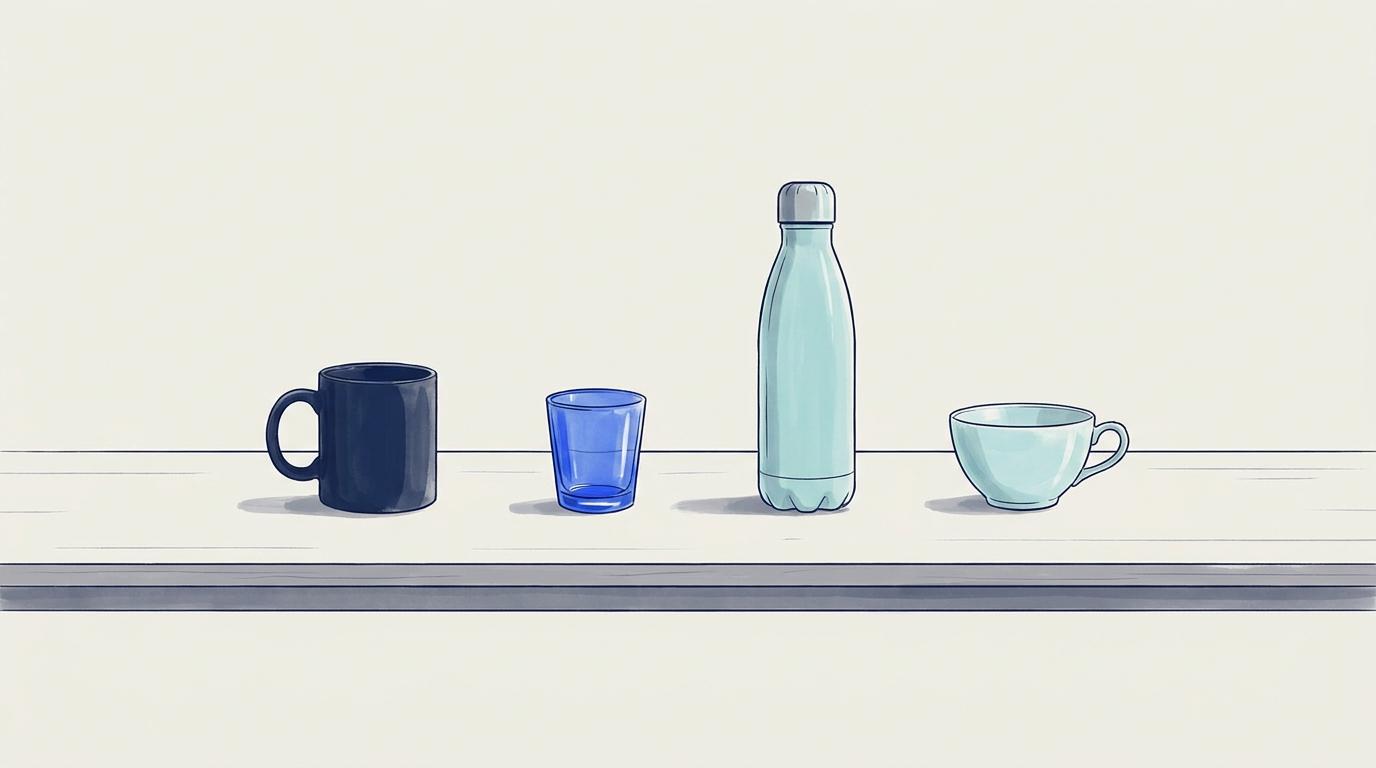
Use a smaller vessel. If you drink from a half-litre bottle, you will tend to empty it. If you pour into a short tumbler, you will tend to finish that instead and come back later. The container does a lot of the work for you.
Give it a few days before you judge it. The first day or two you may notice nothing. What usually changes first is the quality of the urge, not the number of trips — less of the sudden sort, more of the kind you can walk to.
4. The drinks that punish speed most
Not all fluid behaves the same when it goes down quickly. Cold fizzy drinks, strong coffee and beer tend to produce a sharper, earlier urge than plain water does, and gulping them stacks the two effects together.
Beer is the obvious example. It arrives in volume, it goes down fast because it is cold and sociable, and it nudges the body to clear fluid. Hence the familiar evening where the first trip to the toilet opens the floodgates for the rest of the night.
You do not have to give these up to use this. Slow them down, put a glass of water alongside, and take the edge off the arrival rather than the pleasure.
Also worth reading: How Long From Glass to Bladder? Reading Your Own Delay So You Can Plan Around It · Coffee, Tea, Fizz and a Pint: What Each Drink Actually Does to Your Bladder
5. The two hours that benefit most
There are two windows where spreading your drinking pays back fastest. The first is the hour before you go out — a meeting, a service, a drive, a round of golf. A big top-up just before you leave the house lands exactly when you have least access to a toilet.
Drink properly across the morning instead, then take only a small amount in the last hour. You are not drying yourself out, you are moving the same fluid earlier in the day.
The second window is the evening. A large drink after dinner, taken quickly, tends to come back at two or three in the morning. Shifting most of your evening fluid earlier, and sipping rather than finishing a tall glass at nine o'clock, is one of the steadiest ways to protect a night.
6. When the urge is sharp whatever you do
Some men find that even slow, spread drinking gives them abrupt urges. That points less at the speed of the drink and more at a bladder that is signalling early — the urgency pattern rather than the stress pattern. Spreading fluid still helps, but it is not the main lever.
If drinking slowly makes no difference at all over a couple of weeks, say so at your next appointment, and say it in those terms: same volume, spread across the day, no change in urgency. That is a useful piece of information for whoever is helping you.
And if you see blood, get pain or burning when you pass urine, or notice a sudden change in how often you are going, that belongs with your doctor rather than with any fluid plan.
Making it stick for a week
Pick one change, not six. The smaller glass is usually the easiest, because it changes your behaviour without asking you to remember anything.
Keep a rough note for seven days: when you drank, roughly how much, and whether the urges that day were the gradual kind or the sudden kind. You are not building a spreadsheet, just looking for a pattern you can trust.
By the end of the week you will know whether speed matters for you, and by how much. That is a small thing to have learned, and it is yours — it holds up on holiday, on a long drive, and on the days when nothing else about your routine is under your control.