Why this one moment is worth a whole article
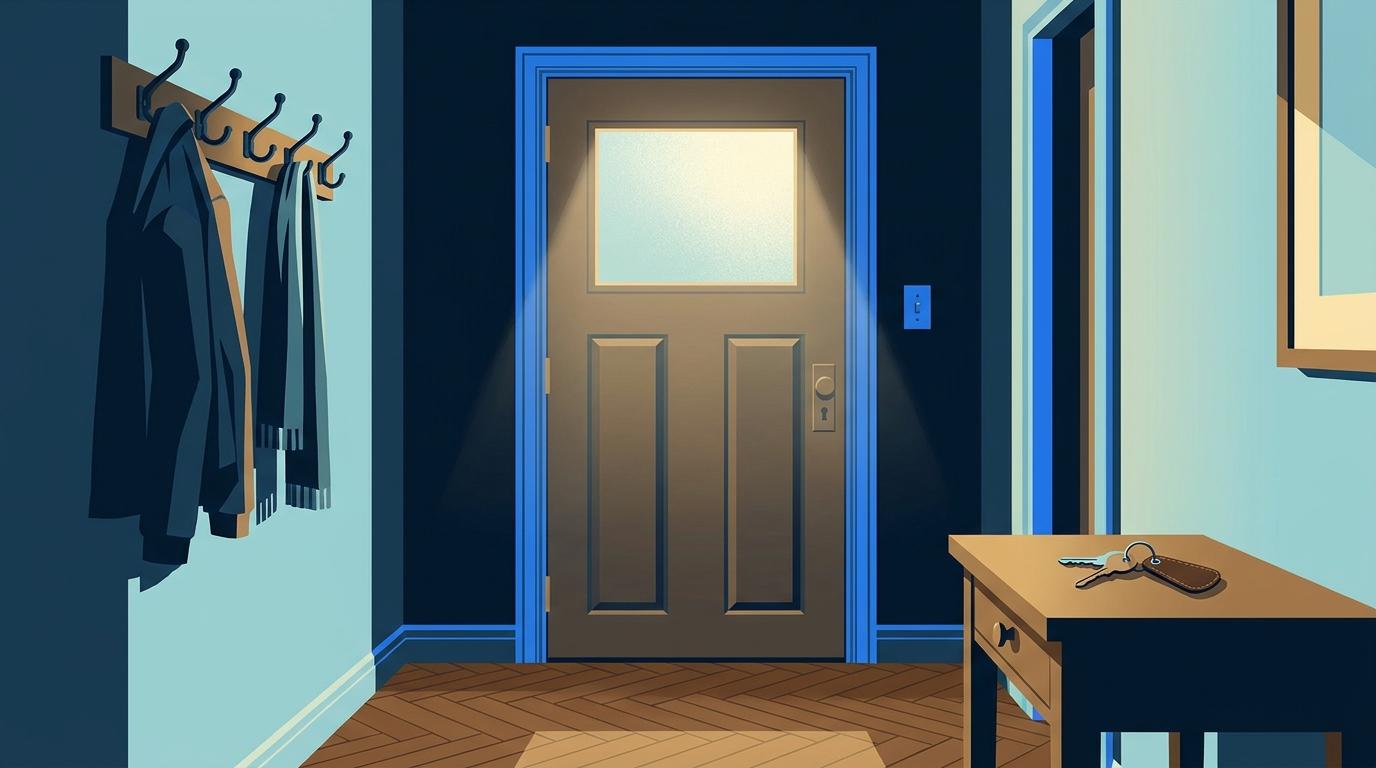
You can be fine for the whole drive home. Fine in the supermarket, fine in the car park, fine at the lights. Then you turn into your own street and something switches on. By the time the key is in the lock you are fighting, and sometimes you lose on the mat.
This is the clearest example there is of an urgency leak. Nothing physical pushed the urine out. You did not cough or lift anything. The bladder decided, on a cue, that now was the time. That is a different problem from the leak that escapes when you stand up from a chair, and it needs a different answer.
A stress leak is a strength and timing problem — the squeeze is not quick or strong enough to hold against a sudden push. An urge leak is a signalling problem. The bladder has learned a habit and is acting on it. You cannot out-muscle a habit by squeezing harder at the door. You change it earlier, in stages. Here are the seven.
Stage 1: In the car, ten minutes out
The work starts before any urge exists. Right now you feel nothing, which is exactly why this stage is useful. Notice what you are telling yourself. Many men run a quiet countdown on the drive home — nearly there, nearly there, hold on. That countdown is part of the trigger.
Try replacing it with something flatter. You are driving home. You will go to the toilet at some point after you get in. That is all. The less you rehearse the race, the less your bladder prepares for it.
If you drink on the move, this is also where the speed matters. A steady sip over the journey sits differently from half a bottle at the last roundabout. Nothing arrives at the bladder instantly, but a gulp makes a fuller bladder sooner, and a fuller bladder makes the doorway harder.
Stage 2: Pulling up outside
Here is where the first real pull usually comes. The house is in sight. For a lot of men the urge arrives the moment the handbrake goes on. That timing tells you it is a learned cue, not a full bladder.
Stay in the seat for a count of ten before you open the door. Breathe out slowly. Let your shoulders drop. You are proving a small point to yourself: the urge appeared, and nothing happened, and you are still dry.
Then get out at normal speed. Not a dash. The rush is what trains the cue deeper each time, and you have probably been rehearsing it for months.
Stage 3: Bags, boot and the path
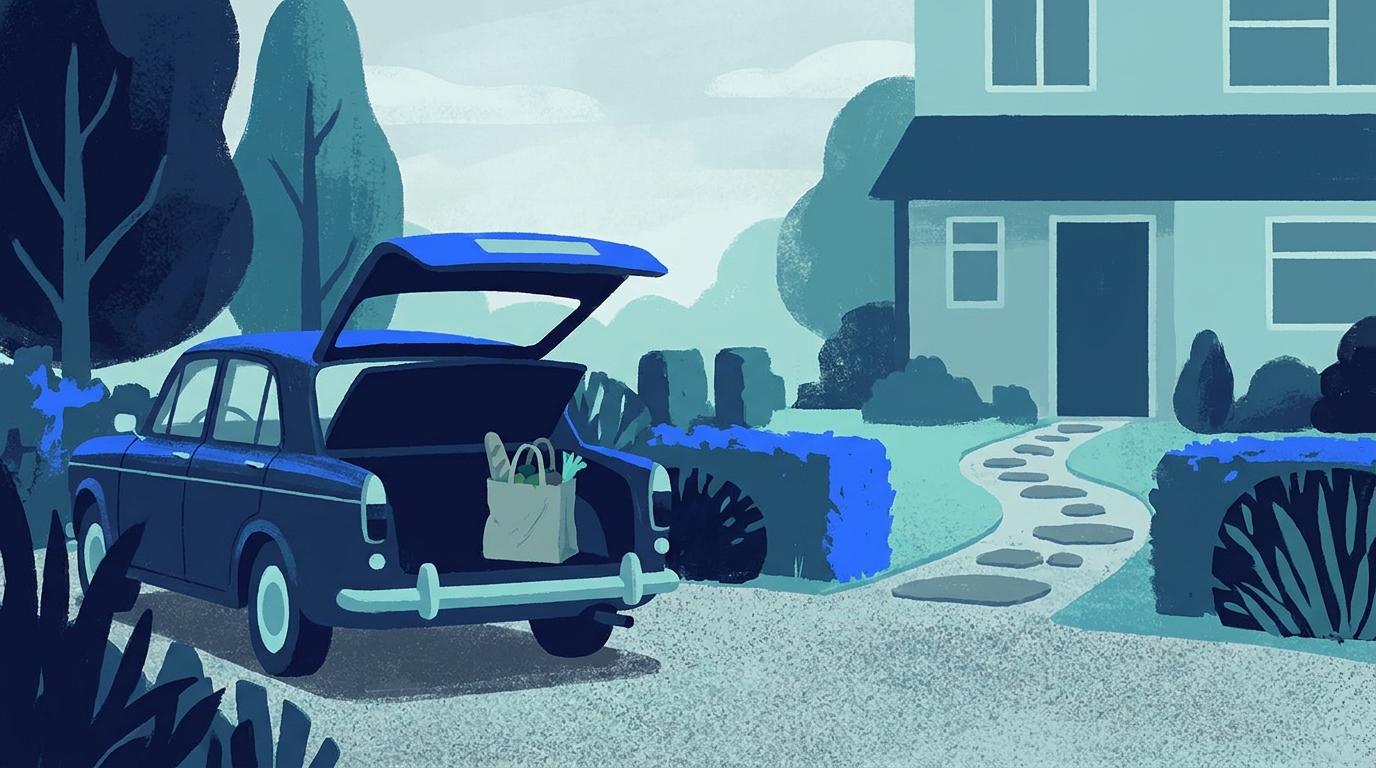
Now two things overlap. The urge is talking, and you are lifting shopping. That lift pushes down on a bladder that is already complaining, and this is the point where men with both kinds of leak get caught.
Take fewer bags per trip, even if it means two journeys. Lift with the bag close to your body, breathe out as you lift, and give a short squeeze just before the weight comes up. That brace handles the push.
The urge itself you leave alone for now. Do not clench everything and hobble up the path. A hard, held, panicked squeeze with your breath locked usually makes the urge louder, not quieter.
Stage 4: Key in the lock
This is the peak. Hands busy, bladder shouting, door not open yet. The instinct is to speed up and jam the key in. Do the opposite.
Stop. Both feet still. Let the bag down if you can. Then do three or four quick, light squeezes — a short pulse of the pelvic floor, released, repeated — rather than one long clench. Those quick flicks tend to settle the signal. Breathe out through the whole thing.
Wait for the wave to drop a little. It usually does, within half a minute. Then open the door at a normal pace. If you leak anyway, you leak anyway — it does not undo the stage. Doing it calmly is what changes the cue over weeks.
Also worth reading: You Know Which Leak You Have. Here Are 8 Things That Change Next · When You Have Both: Training for Mixed Leaks Without Pulling in Two Directions
Stage 5: Through the door, coat still on
You are in. The bathroom is right there. This is the moment that decides whether the habit gets stronger or weaker.
If you go straight through, still holding the keys, you have just told your bladder that the front door means empty now. Instead, put the keys down. Hang the coat. Put the shopping on the counter. Ninety seconds of ordinary business first.
Then go. You are not denying yourself the toilet. You are putting one small gap between the trigger and the trip, and that gap is the thing that does the retraining. Over a few weeks, stretch it a little — bags away, kettle on, then go.
Stage 6: At the toilet
Take the time to empty properly. Do not hover, do not strain, do not push to get it over with. Let it come, wait a few seconds at the end, and let the last of it go. A bladder that empties well gives you a longer, quieter stretch afterwards.
If you leaked on the way in, deal with it plainly. Change the pad, rinse, dry, move on. The longer you stand there annoyed with yourself, the bigger the next doorway feels.
And one plain note: if emptying hurts, if there is blood, or if you suddenly cannot pass urine at all, that is a call to your doctor the same day, not something to train through.
Stage 7: Building the door into training
Once you know this moment is a cue rather than a true full bladder, you can practise it on purpose. Walk out to the bin, come back in, put the keys down, do not go to the toilet. Small rehearsals, no pressure, a few times a week.
Work the quick flicks separately too, when nothing is happening — sitting at the table, waiting for the kettle. Short, light, properly released. Those are the reps you will reach for at the lock.
Expect uneven progress. Some weeks the door barely registers, then a cold day or a long drive brings it back. That is normal, and it is not a sign the work stopped counting. Pick one stage from this list — most men find stage five changes things fastest — and run it for a fortnight before you add another.