The problem isn't the leak. It's the hour you lose afterwards
You wake at some point in the small hours and you know straight away. Damp pad, damp pyjamas, maybe the sheet. The leak itself takes a minute to sort out. What costs you is everything that happens next — the bright bathroom light, the search for a clean pair of shorts, the standing in the kitchen because you're now wide awake, the hour of lying there doing arithmetic about how long until the alarm.
Men who sleep well through this aren't leaking less. They've just got the middle-of-the-night part down to something close to automatic. They barely come up to the surface. They deal with it half asleep and go back down.
That's what this is: a seven-step run-through of the ten minutes after you wake. Set it up once in daylight, and you'll do it without thinking at three in the morning.
1. Decide the night before whether you're getting up at all
Not every night leak needs you out of bed. A small amount held in a pad, with nothing wet against skin and nothing on the sheet, can often wait until morning. Getting up for it wakes you far more than the leak did.
The test is simple and you can do it lying down: is anything actually wet against your skin, and is anything wet on the bed? If the answer to both is no, roll over. If skin is wet, get up — damp skin through the rest of the night is how soreness starts.
Make that decision rule in advance. At three in the morning you're not in a fit state to weigh things up, and the default when you can't decide is usually to get fully up, which is the expensive option.
2. Keep the light low and never turn on the main one
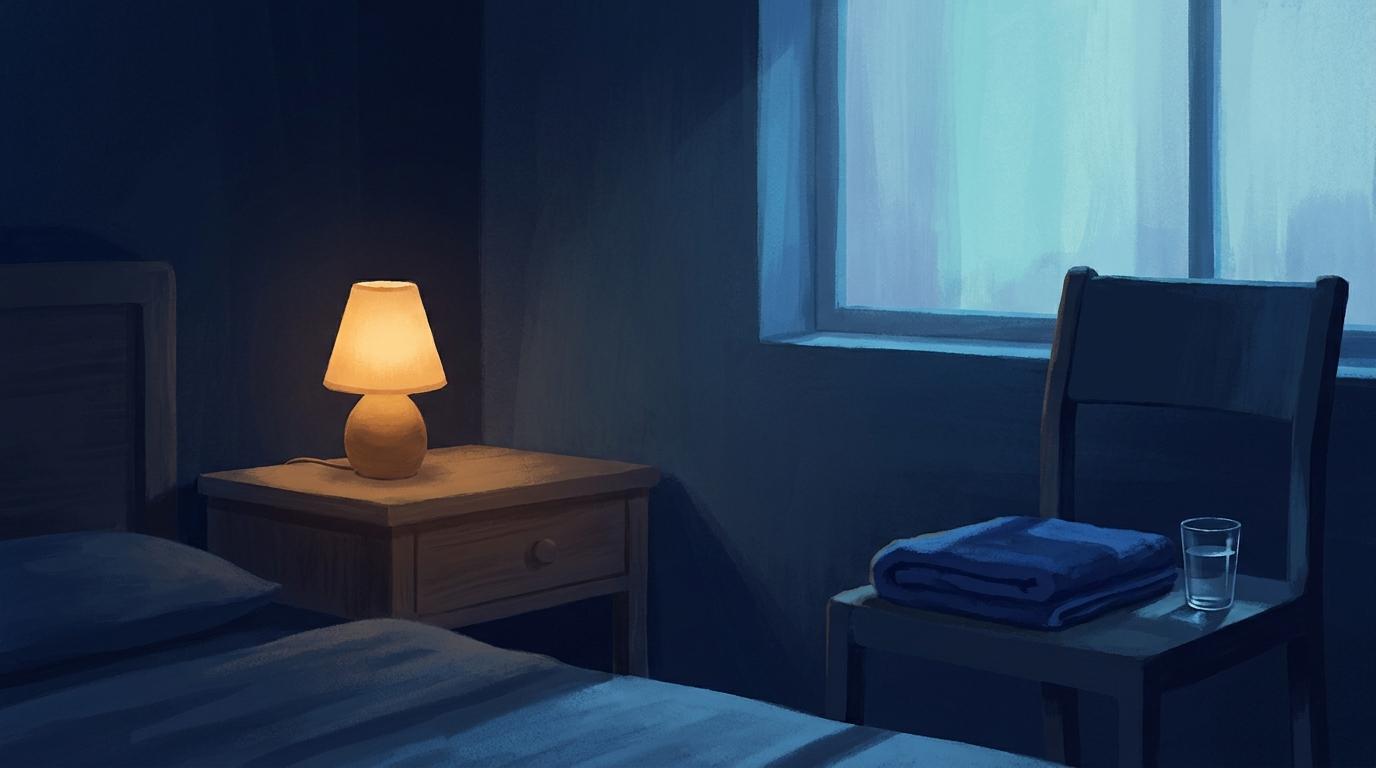
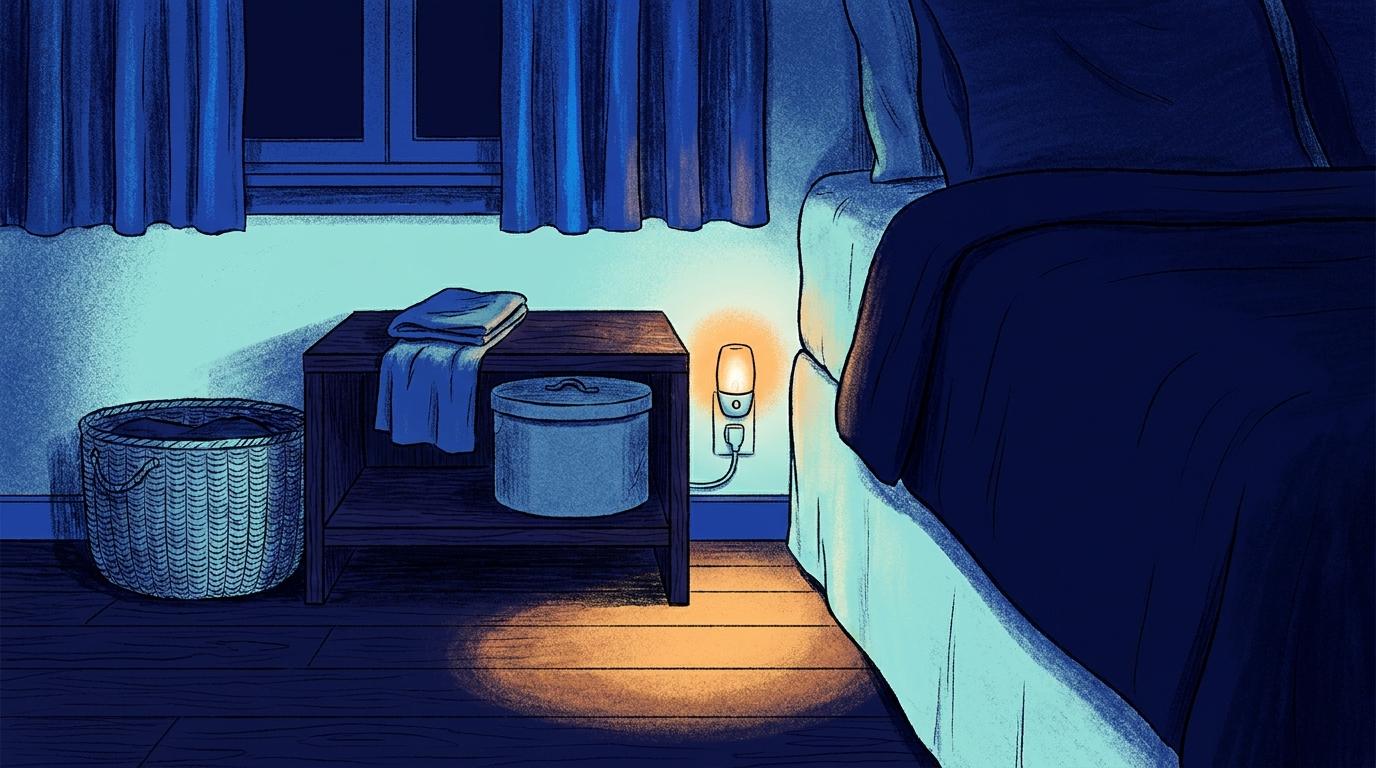
Bright light at three in the morning tells your body the night is over. You can finish the whole job in a low, warm light — a plug-in nightlight at floor level in the hallway, or a small lamp you can reach without sitting all the way up.
Avoid the bathroom ceiling light if you can. If you need the bathroom, a nightlight in there does the job for a change of pad. If the main light is the only option, keep your eyes down and don't look at the mirror.
Phones are the other trap. Checking the time is rarely useful information. It either tells you there's hardly any night left, which is deflating, or plenty left, which starts the counting. Turn the clock away from the bed.
3. Have the clean kit within arm's reach, not in another room
Everything you need for a change should be reachable from where you sleep, or a few steps away at most. A clean pad or pair of absorbent pants, a clean pair of shorts, a dry flannel or some wipes, and something to put the used one in.
A shallow basket or a low shelf on your side of the bed is enough. Lay it out the same way every night so your hand finds things in the dark. If you share a bed, your side, your system, no negotiation needed at three in the morning.
Restock it in the evening, as part of locking the back door. The single worst version of this is standing in a cold hallway at three, rummaging in a cupboard, fully awake, because the basket was empty.
4. Change standing in one spot, in one order
Do it the same way every time: old one off and into the bag, quick wipe and dry, barrier cream if you use one, clean one on, shorts up. Same order, same spot on the floor, every night. Order is what lets you do it without really waking.
Dry properly before the clean pad goes on. Ten seconds with a dry flannel. Skin that stays damp under a pad for four hours is what gets red and sore, and sore skin wakes you on its own the following night.
Lidded bin or a bag you can seal, kept by the bed and emptied in the morning. Walking to the outside bin in the cold is a wake-up you don't need.
Also worth reading: 8 Things That Wake You in the Night When You Leak, and the Fix for Each · Setting Up the Bed and Bedroom for Night Leaks: 8 Practical Steps
5. If the sheet is wet, cover rather than strip
Changing a bed at three in the morning is the end of your night. Don't. Lay a dry towel or a washable absorbent sheet over the damp patch and sleep on that. In the morning you can strip the whole lot properly, in daylight, in five minutes.
This is easier if there's a waterproof layer under the bottom sheet already, because then the damp is in one thin layer and a towel over it is genuinely fine. Keep two spare towels folded on the chair so you're not hunting.
If there's a lot of fluid, shift down the bed or across to the dry side rather than trying to fix it. Sleep is the thing you're protecting. The mattress can be dealt with after breakfast.
6. Empty the bladder properly before you lie back down
If you're up anyway, use the toilet, and give it time. Sit rather than stand — it's easier to let go fully when you're sitting, and half a minute of waiting after you think you've finished often produces a bit more.
Don't push or strain to speed it up. Straining works against the muscles you're training during the day, and it doesn't empty you any faster. Let it come, wait, then stand slowly and give it a moment in case there's a last bit.
Before you leave the bathroom, one slow squeeze and release of the pelvic floor. Not a workout — just closing the door behind you, which cuts the dribble on the walk back to bed.
7. Give yourself one job in bed instead of lying there thinking
The leak wakes you for a minute. The worrying keeps you up for an hour. Once you're back under the covers, the question your head will reach for is whether it'll happen again before morning, and there's no answer to that at three in the morning.
Have something dull and physical to do instead. Slow breathing out longer than you breathe in. Working through your body from feet upward, letting each part go heavy. Anything that gives your attention a small boring task. It doesn't have to work quickly. It only has to be something other than the question.
Then let the morning be the morning. Note what happened — what time, how wet, what you drank and when — but note it after breakfast, not now. Patterns across a fortnight are worth having. One night tells you almost nothing, and a drier run usually arrives while you're not watching for it.
Making it automatic
Walk through the whole thing once while you're awake and dressed, in the dark, like a fire drill. Where the basket is. Where you stand. Where the bag goes. It feels daft in the evening and it saves you twenty minutes at three in the morning.
Then look at the one step that's costing you most. Usually it's the kit being in the wrong room, or the main light going on. Fix that one and leave the rest alone for a fortnight.
And keep the daytime training going, because the night follows the day. If something changes sharply — blood, pain, burning, or wetting the bed when that's never happened before — that's a conversation with your doctor rather than a thing to manage with towels.