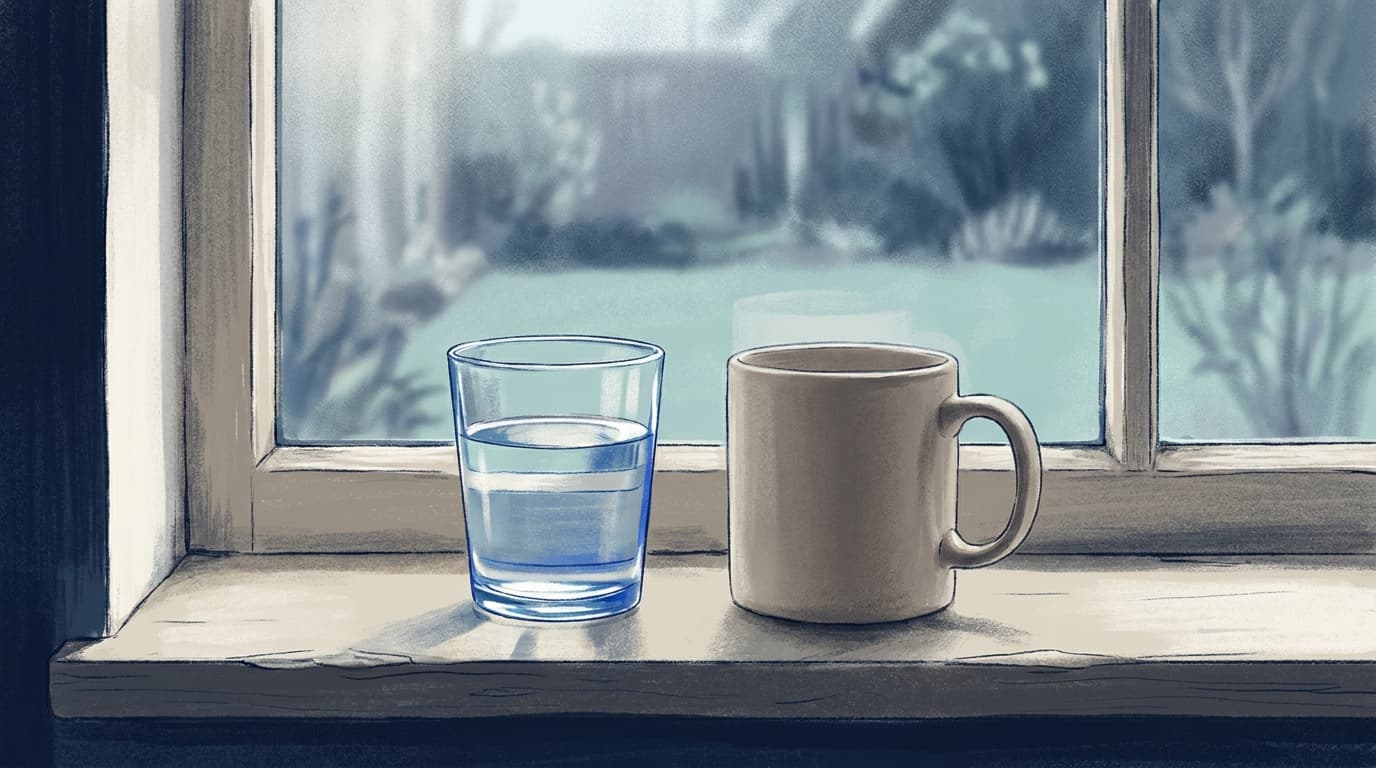
Cutting back on fluid makes the problem worse, not better
It's the first thing most men try. Fewer drinks, fewer trips, less to leak. It seems logical, and it fails within a day or two.
When you drink less, your urine gets stronger and more concentrated. Concentrated urine irritates the bladder lining. An irritated bladder tells you it's full when it isn't — so you get the same urgency, the same rush to the toilet, on less liquid. You've also given yourself a headache and a dry mouth for nothing.
The goal isn't less fluid. It's steady fluid, spread through the day, so your bladder is never dealing with a flood or with something that stings.
Steady sipping beats the big glass
Your kidneys work at a fairly constant rate, but they can only keep up with so much at once. Drink a large glass quickly and a lot of it arrives at the bladder in a short window — usually somewhere between twenty minutes and an hour later, depending on what else is in your stomach.
That's the surge that catches men out. A pint of water with lunch, and an hour later you're looking for a toilet with real urgency. Spread the same amount over the same hour in small mouthfuls and the arrival is gentler. The bladder fills at a pace you can feel coming.
A practical version: keep a glass or bottle within reach and take a few sips every fifteen or twenty minutes, rather than draining it in one go and refilling it later.
Front-load the day, taper the evening
Most of your fluid should go in before the late afternoon. That's when you're upright, moving, and near your own toilet. It's also when your body is best placed to clear it.
From late afternoon onwards, start easing off. Not stopping — easing off. Smaller amounts, and stop the large drinks a couple of hours before bed. You can still have a mouthful of water at bedside if you want one.
There's a second reason for the taper. Fluid that pools in your legs during the day comes back into circulation when you lie down, and your body clears it overnight. If you've also drunk heavily in the evening, you've stacked two loads on top of each other.
Some drinks irritate the bladder, and it's worth finding out which ones do it to you
Caffeine is the usual culprit — coffee, strong tea, cola, some energy drinks. It pushes the kidneys to make more urine and it can make the bladder muscle twitchy. Alcohol does something similar, and it also dulls the signals that tell you to wake up at night.
Beyond those two, it varies. Fizzy drinks, citrus juice, artificial sweeteners and very spicy food bother some men and not others. Nobody can tell you in advance which list is yours.
Test one at a time. Drop a single suspect for a week and pay attention. Then bring it back and see whether things change. Changing five things at once tells you nothing.
Know your own lag time
Everyone has a rough gap between drinking and needing to go. For most people it's somewhere in the half-hour to hour-and-a-half range, longer if you've eaten. Yours is yours, and knowing it is genuinely useful.
Find it over two or three ordinary days. Note when you drink and when you next feel a real urge. You're not keeping a diary forever — you're looking for a pattern.
Once you know it, you can plan. If your gap is about forty-five minutes, then a coffee forty-five minutes before you leave the house is a bad idea, and one straight after you arrive somewhere with a toilet is a fine one.
Drinking around events, not during them
A church service, a film, a long meeting, a meal out with friends. The instinct is to arrive dry and drink nothing. That's the same mistake as cutting back generally, just concentrated into an afternoon.
Better: drink normally in the hours before, then finish your last proper drink about an hour and a half ahead. Use the toilet just before you go in, even if you don't feel much need. Then sip lightly during the event rather than going without.
This is also where your pelvic floor work pays off. A trained floor gives you more time between the first signal and real pressure. Combined with sensible timing, that's often the difference between sitting comfortably and watching the exit.
Reading your own urine, and when to stop guessing
A simple check: pale straw colour, most of the time, means you're roughly where you want to be. Very dark means you're behind. Completely clear all day usually means you're overdoing it, and you'll pay for that at three in the morning.
First thing in the morning is naturally darker. Don't judge the day by it. Look at the middle of the day instead.
If you see blood, if passing urine burns or hurts, if you have a fever, or if something changes suddenly and doesn't settle — that isn't a fluid-timing question. Ring your doctor. Everything on this page is about the ordinary, steady work of managing a normal day, and it's worth doing precisely because it's ordinary. Give it a fortnight of steady sipping and honest timing, and you'll know a great deal more about your own bladder than you do today.