
The day that isn't yours
Plenty of men reading this are not retired in any real sense. You're up early because your wife needs help getting dressed. You're driving your mother to an appointment that was moved twice. You've got the grandchildren Tuesdays and Thursdays, and on the other days the phone might go at any hour.
Advice that starts with "set aside fifteen minutes" assumes you own your time. You don't. Someone else does, and that someone needs you more than your pelvic floor does.
So the question isn't how to carve out a quiet block. It's how to train inside a day that keeps interrupting you. Here are seven ways to do that.
1. Train in the waiting, not in the gaps you hope for
Caring days are full of waiting. Outside a consulting room. In the car park while she finishes. In the hall while he finds his shoes. By the kettle. In the chemist queue.
These are the most reliable minutes you have, because they're forced on you. You can't plan them, but you can decide in advance what you'll do when one arrives. Decide now: when I'm waiting and sitting, I do a set.
Waiting usually feels like dead time, and it grates. Putting the work there turns it into something. That's not a motivational trick — it's just the only part of the day that nobody else has claimed.
2. Make the set short enough to abandon
The reason training dies on caring days isn't lack of time. It's that you start something, get called, and stop halfway. Do that four or five times and you stop starting.
So build sets you can drop without losing anything. A few slow squeezes with a full release between them. Thirty seconds, maybe a minute. If you get through three of them, good. If you get through one and the shout comes, that one still counted.
Short sets done properly beat long sets done half-attentively while listening out for a noise upstairs. If your attention is elsewhere, the squeeze goes sloppy and you end up bracing your stomach and your buttocks instead.
3. Attach it to the care itself
You already have a routine — it just isn't yours. Tablets at eight. The walk to the car. Settling someone for a nap. Washing up after their lunch.
Pick two of those fixed points and let them carry the training. While the kettle boils for her tea. While the bath is running. While you're stood holding a coat. The task is already happening at the same time every day, so the reminder is built in.
Standing work is harder than sitting work, so if your anchors are all standing ones, expect them to feel tougher. That's not a problem. It's the version you need most, because leaks happen standing up.
4. Accept the on-call day is a maintenance day
Some days you are simply waiting for something to go wrong. A hospital might ring. A fall might happen. You can't settle, and you can't concentrate.
On those days, drop your ambitions. Do one small set in the morning and one in the evening, and call it done. You are not building on a day like that. You're keeping the habit alive so it's still there on Thursday.
The men who come through this well are not the ones who train hardest. They're the ones who never stop entirely. A maintenance day is a win, not a failure.
Also worth reading: Full, Short or Bare Minimum: 7 Ways to Size Your Training to the Day You've Actually Got · Anchor It to Something You Already Do: 7 Slots for Pelvic Floor Training
5. Put a set at the handover
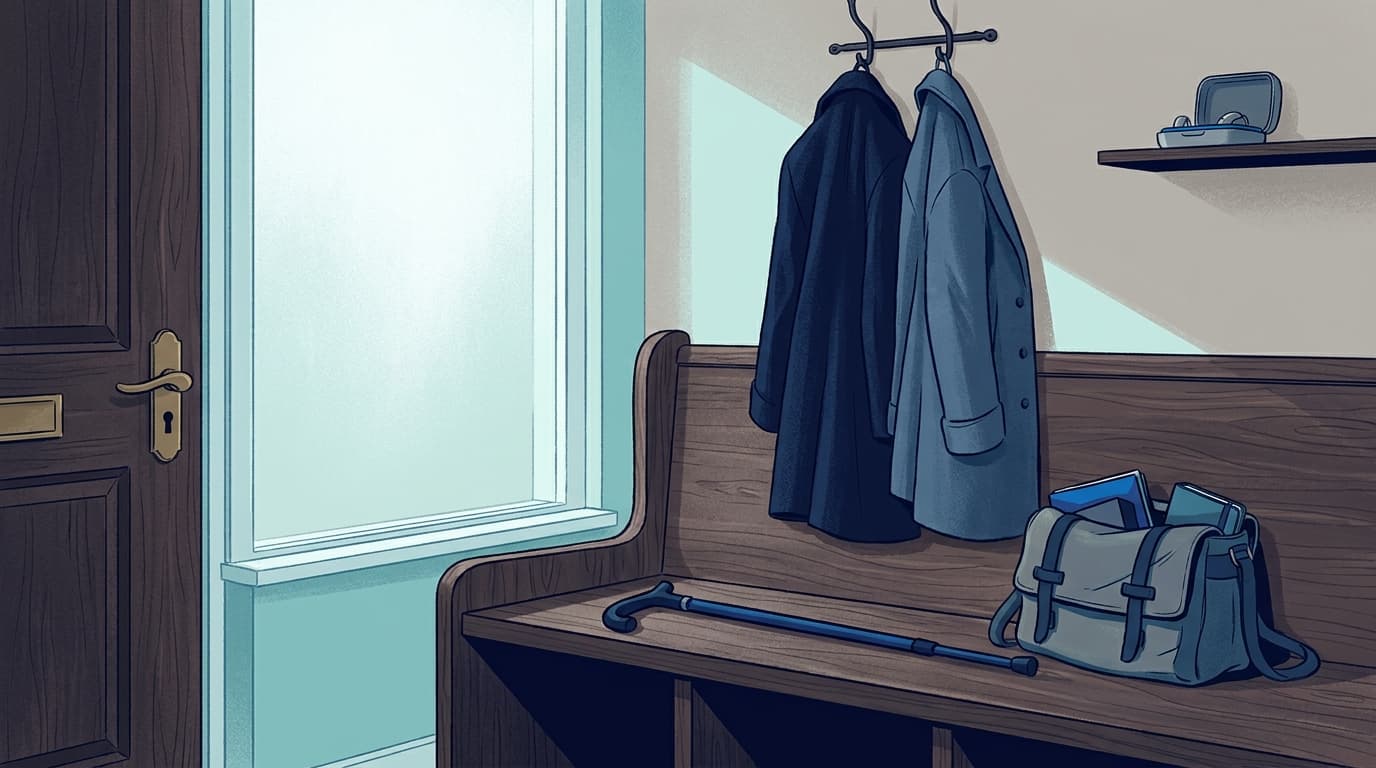
If someone else takes over — a carer arriving, your sister doing the afternoon, the children going home — there's usually a moment just after they leave or arrive when you exhale.
That moment is a good anchor, because it's emotionally distinct. The shoulders drop. You put the kettle on. Do your set there, before you sit down with the tea, because once you sit down with the tea the day is over.
If the handover is the only training you manage all day, fine. One properly done set at a predictable time, every day, is more useful than a long session you do once a week when you happen to get a break.
6. Protect one appointment that is yours
Carers are good at putting their own things last, and the first things to go are the ones with no deadline. Training has no deadline. Nobody rings you about it.
So give it a fixed slot once or twice a week and treat it like an appointment someone else made for you. Twenty minutes, lying down, door shut if you can manage it. Tell whoever's around that you'll be back shortly. You don't need to explain what it's for.
This is where you do the harder, longer work — the slower holds, the standing sets, the things that need your full attention. The rest of the week keeps the habit ticking. This slot is where it actually moves.
7. Watch your own fluids, not just theirs
Carers drink badly. You make tea for someone else all day and forget your own, then you're parched by four and drink a pint of something in one go. Concentrated urine irritates the bladder, and a sudden large drink fills it fast. Both make leaks more likely.
Keep a glass of water somewhere you pass often and sip at it through the day. Don't cut back to stay dry — it usually makes urgency worse, not better.
And keep an eye on your own body generally. If something changes sharply, or there's pain or blood, that's one for your doctor and it shouldn't wait until the next time you're there for someone else. Being the one who looks after everyone doesn't mean you go to the back of the queue.
What to set up tomorrow
Don't redesign the week. Choose two anchors from the care routine you already have, and one handover moment. Three slots, each a minute or less.
Then pick one day — the quietest one — and book your twenty minutes in it. Written down, same day each week.
Days you don't control will keep coming. The training doesn't need a calm life to work. It needs the same small thing, often, for long enough — and that you can do while the kettle boils.